
Last updated November 20, 2026
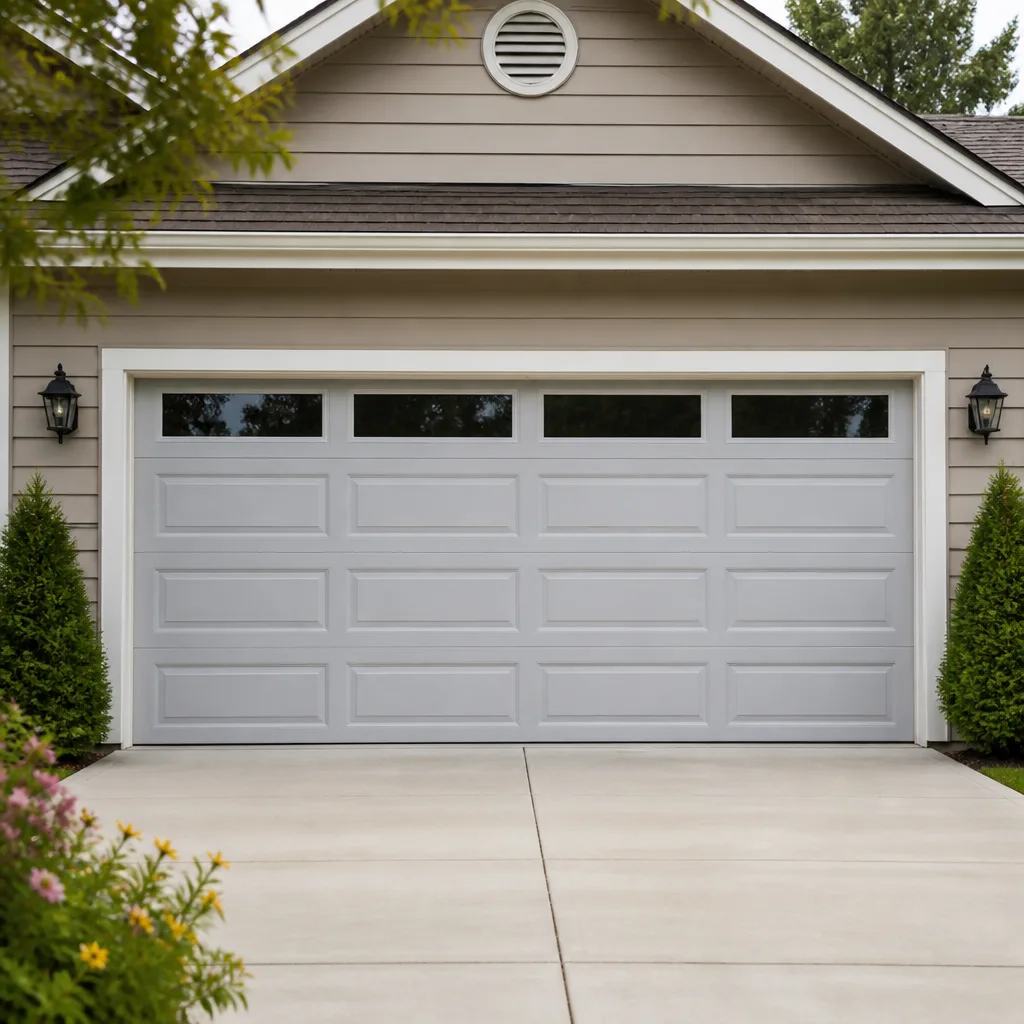 Raised-panel steel
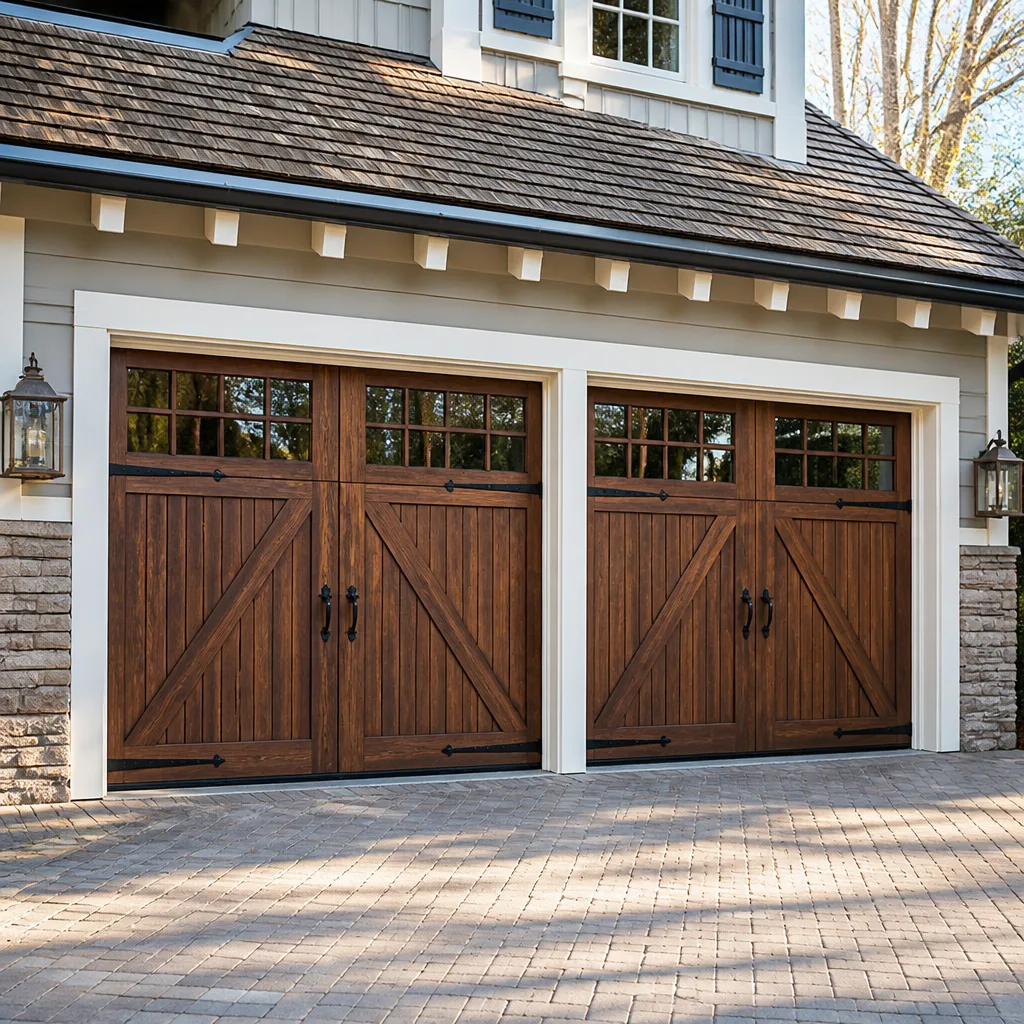 Carriage house
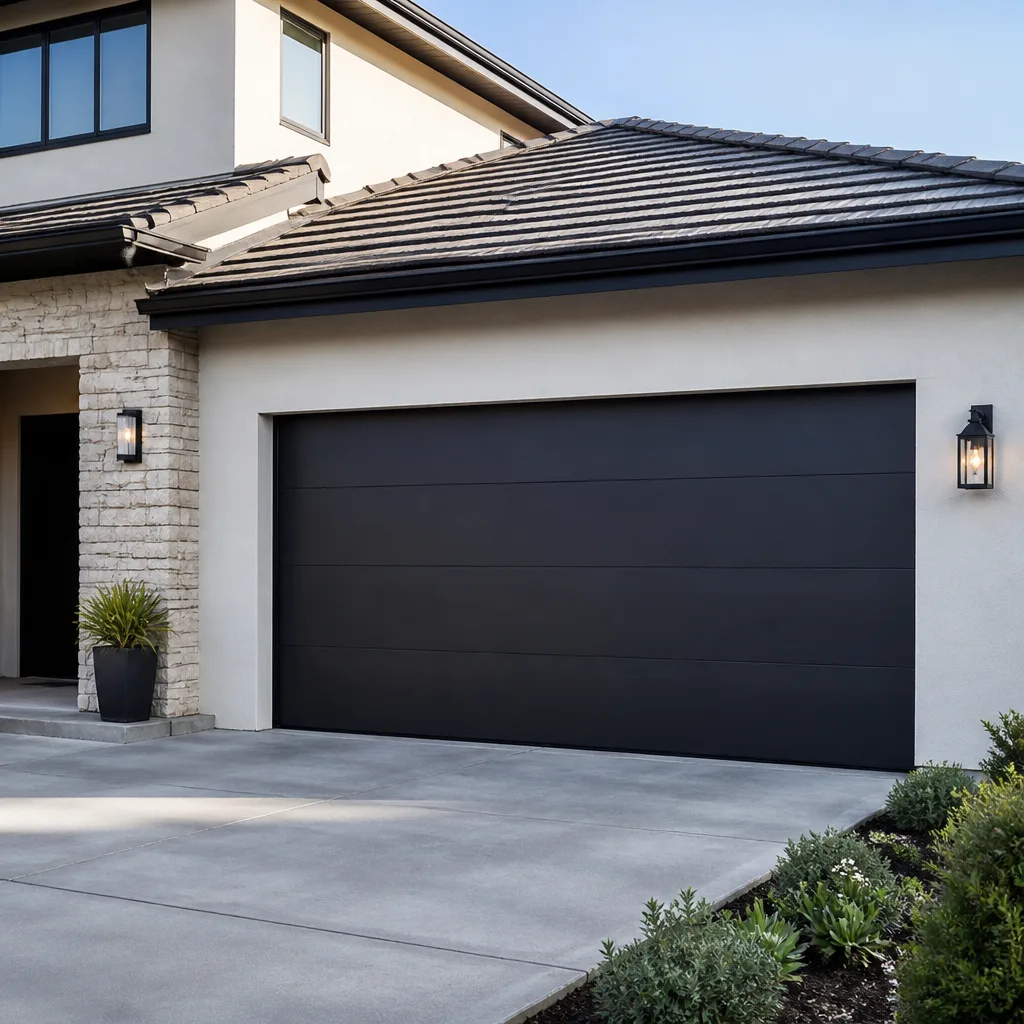 Modern flush
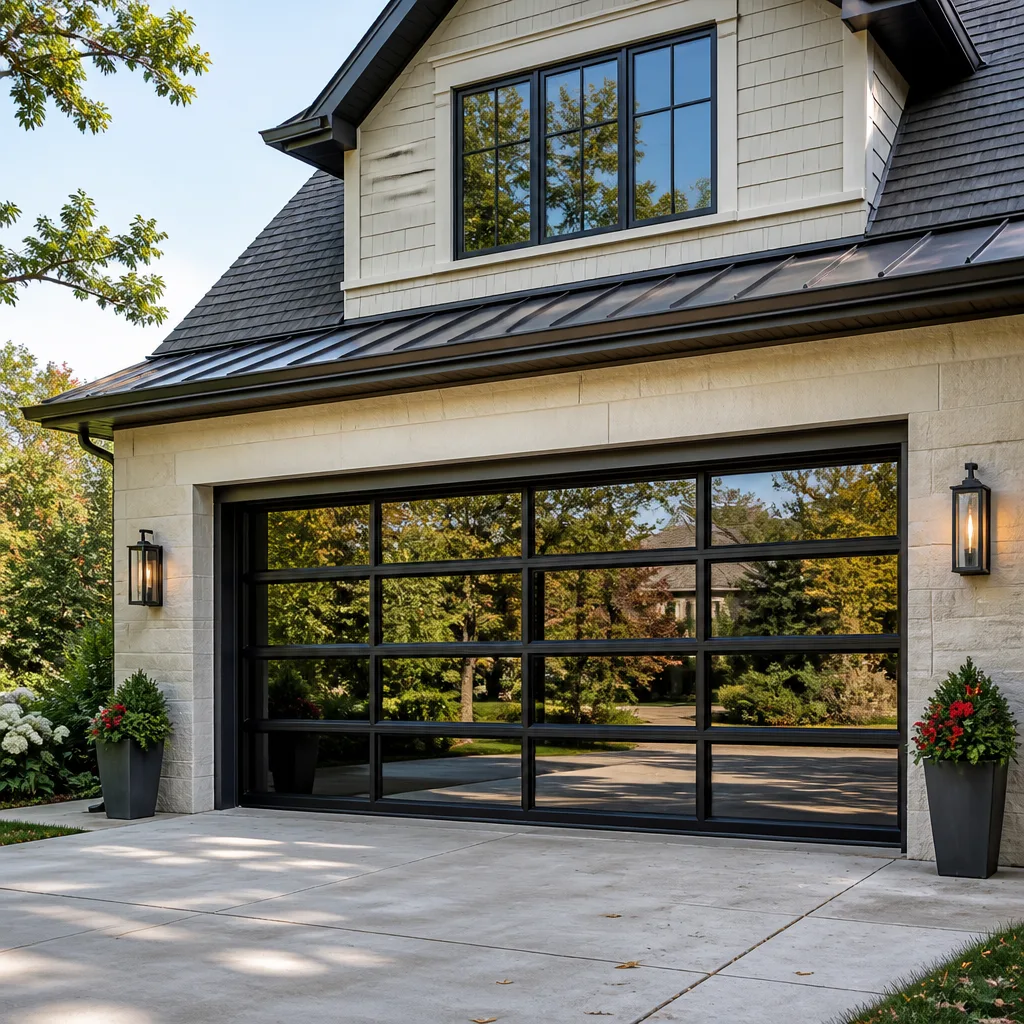 Full-view glass
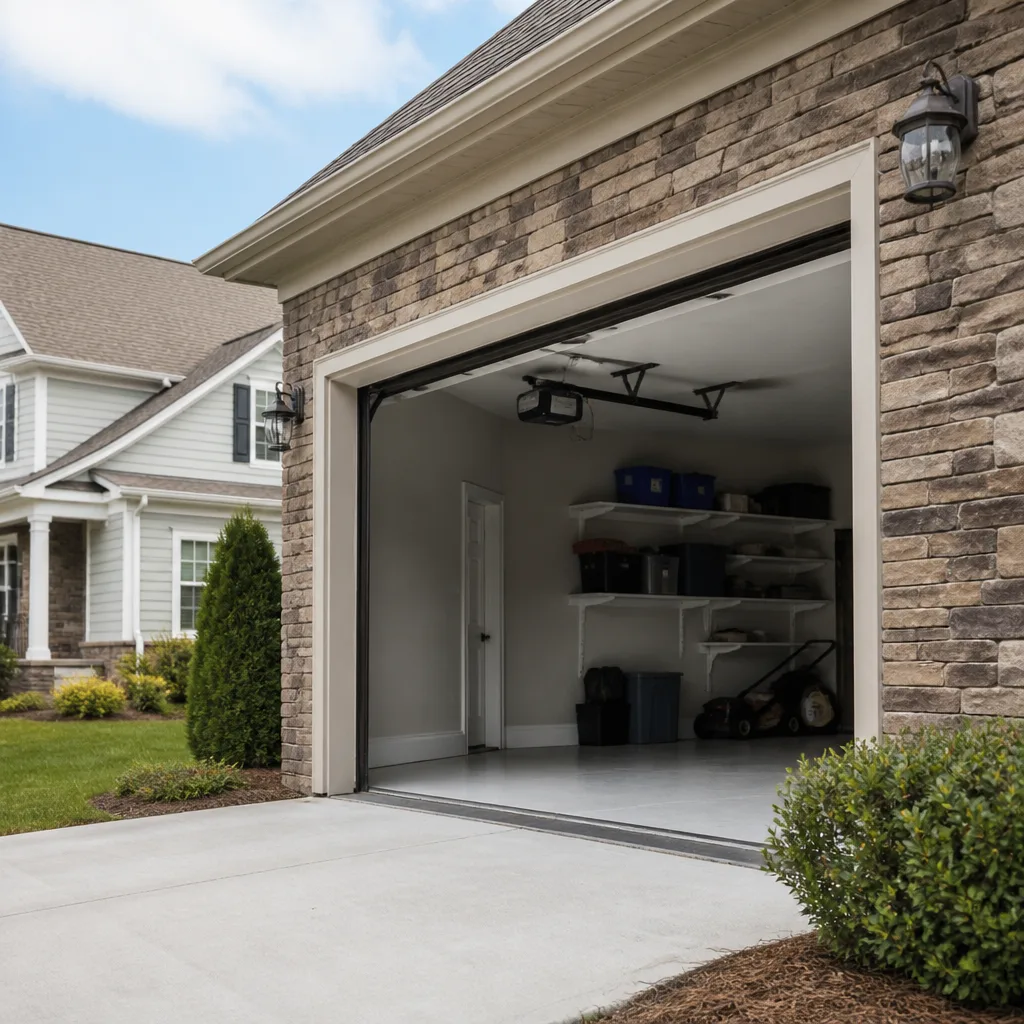 LiftMaster openers
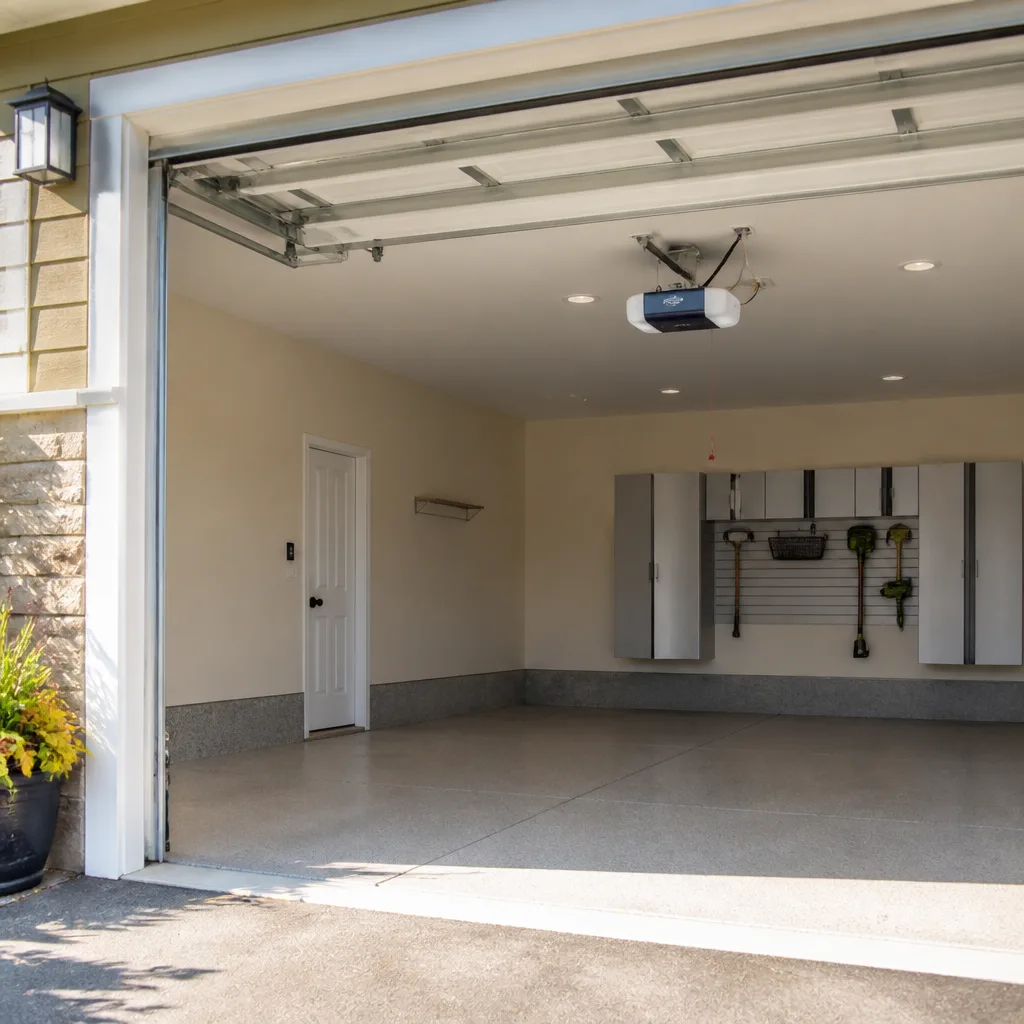 Chamberlain openers
Full 25-point door and opener safety check with every visit - springs, cables, rollers, tracks, and your LiftMaster or Chamberlain opener included
You get a price before we start. It does not change when the pro arrives.
Get your free estimateThe Complete Guide to Garage Doors in Oakley
Most garage door guides are written as if every house sits on the same lot, with the same framing, the same climate, and the same door. That’s not how Oakley works. Walk down a single block in this neighborhood and you’ll pass a pre-1960s craftsman with a narrow single-bay opening and a newer infill build with a wide double-car door and a smart opener. The two homes need different widths, different track clearances, and sometimes different opener systems entirely. That’s the gap this guide fills. We’ll cover how Oakley’s housing stock shapes every decision, which materials survive Ohio’s freeze-thaw cycles, how header requirements differ between single and double doors, what “in-stock” really means in the Greater Cincinnati market, and how to read your door’s data plate before you call anyone.
Quick Answer
The right garage door for an Oakley home depends less on style than on your house’s age, opening dimensions, and framing. Pre-1960s Oakley homes often need custom sizing or adapters, while newer infill builds usually fit standard sizes and modern openers. Steel and insulated sandwich doors hold up best against Ohio’s freeze-thaw swing, and the price for any job should be set per job by a written estimate.
Styles & brands we work with
- Raised-panel steel
- Carriage house
- Modern flush
- Full-view glass
- LiftMaster openers
- Chamberlain openers
Table of Contents
- How Oakley’s Housing Stock Changes Your Door Options
- Which Door Materials Hold Up in Ohio’s Freeze-Thaw Cycles
- Single-Car vs. Double-Car: Header and Sizing Requirements
- How to Read Your Door’s Data Plate
- Brand Availability in the Greater Cincinnati Market
- Why Spring Repair Is Precision Work, Not a Commodity Fix
- Matching Your Opener to Your Door and Your Home
- Repair vs. Replace: The Call We Walk Homeowners Through
How Oakley’s Housing Stock Changes Your Door Options
Housing age is the single biggest factor in what a garage door project actually involves in Oakley. The neighborhood is a mix: older craftsman homes from the pre-1960s era, and newer infill construction tucked between them. Those two groups don’t share a standard.
Older Oakley homes were often built with single-bay garages sized for cars that were smaller and door openings that were narrower than the modern eight-foot standard. Some were detached garages with low headroom. When we look at an older Oakley garage, we’re usually checking three things first:
- Opening width and height – whether it matches a standard stock size or will need custom fabrication.
- Headroom above the door – how much vertical space exists for the track and spring, which affects whether standard or low-headroom hardware fits.
- Header condition – older framing may need reinforcement or an adapter bracket before a new door can hang properly.
Newer infill homes in Oakley are usually built to standard double-car widths and modern headroom tolerances, which makes them simpler to fit. But there’s a catch: many newer builds use opener systems with smart-home integration, and matching replacement parts by brand matters.
The practical point is this. Two Oakley homes on the same street can differ in square footage of garage space, header height, and opener voltage. A guide that assumes one standard is wrong for at least half the neighborhood. If your door is on an older Oakley home and you’re planning a replacement, get a free measure before assuming a stock door will fit. We quote every job in writing before anything is ordered.
Which Door Materials Hold Up in Ohio’s Freeze-Thaw Cycles
Oakley sees wide temperature swings through the year. Cold winters with repeated freeze-thaw cycles, then hot humid summers. That pattern is unkind to certain door materials and forgiving to others. Material choice should be driven by how your door will actually age in this climate, not by what looks sharpest in a showroom.
Here’s how the common materials perform in a Midwest climate like Oakley’s:
- Insulated steel sandwich doors – the most reliable choice for Ohio. Steel faces resist the freeze-thaw swing, and the insulation layer handles the temperature difference between a heated home and a cold garage. This is what we recommend for most Oakley homes.
- Non-insulated steel – fine for a detached garage that isn’t heated. In an attached Oakley garage, it can leave the room above or beside it cold and can sweat in humid summers.
- Aluminum – light and rust-resistant but dents easily and offers little insulation. Works for low-use situations, less so for a daily-entry door.
- Wood and wood-composite – attractive on craftsman-style Oakley homes, but they need repainting or refinishing and can swell, warp, or crack with moisture and freeze-thaw movement over time.
- Vinyl and fiberglass – durable against moisture but can become brittle in cold snaps and may not insulate as well as a foam-core steel door.
We’ve seen wood doors on older Oakley homes that look beautiful after years of upkeep and others that failed within a few seasons because they weren’t sealed properly. The material isn’t the only variable. Installation quality and ongoing maintenance decide whether a door lasts. A steel sandwich door installed well will generally outlast a high-end wood door left unmaintained.
For most Oakley homeowners who want a door that resists the climate and needs minimal upkeep, insulated steel is the practical pick. If you’re replacing a door and want to see how a specific material fits your opening, our garage door installation service includes a measure and a written quote with material options.
Single-Car vs. Double-Car: Header and Sizing Requirements
The width of your door changes the structural demands on the header above it, and this is where Oakley’s mixed housing stock really matters. A single-car door typically spans eight to nine feet. A double-car door spans sixteen feet or more. The wider the opening, the more load the header has to carry, and the more critical proper framing becomes.
On older Oakley homes with single-bay garages, headers are usually sized for a narrower door. When a homeowner wants to widen an opening for a double door, the header often needs reinforcement or replacement – a structural job, not just a door swap. On newer Oakley infill homes built with standard double bays, the framing is usually already sized correctly.
Here’s what we check on every install, in order:
- Measure the rough opening – the actual framed opening, not the visible door face. This determines the true door size.
- Inspect the header – confirm it can carry the load of the door and its hardware, especially on wider double doors.
- Check headroom and backroom – how much space exists above and behind the door for the track and opener.
- Confirm the jambs are plumb and square – older Oakley garages sometimes settle, which can throw off the opening.
- Verify the sill – a level sill keeps the door sealing properly against weather.
For a single-car door in a typical Oakley craftsman garage, the framing is often straightforward. For a double-car door, especially on a widened opening in an older home, the header work can add real scope to the project. That’s why a free measure matters before anyone quotes a price. The written estimate accounts for what the framing actually needs, and the price is agreed before any work starts.
How to Read Your Door’s Data Plate
Before you call anyone about repair or replacement, find your door’s data plate. It’s a small label or sticker, usually on the inside of the door panel or on the bottom section, and it tells a technician exactly what system they’re dealing with. Reading it takes a minute and saves guesswork.
Here’s how to read it, step by step:
- Locate the label. Check the inside face of the bottom panel and the edges of the door sections. On opener units, the data plate is usually on the back or side of the motor housing.
- Note the manufacturer and model. This tells us which brand’s parts will fit. Oakley homes have doors from Amarr, Wayne Dalton, Clopay, Raynor, and others, and each uses different spring and hardware specifications.
- Record the door size. Width and height, in inches, usually printed on the plate.
- Note the serial number. Useful for matching replacement panels or sections to the original build.
- Check the opener plate for voltage and model. This matters if you’re having opener problems, since some systems pair only with specific brands.
Take a photo of the plate and the full door from inside before you call. That one photo saves a lot of phone back-and-forth. We work on all eight major garage door brands – LiftMaster, Chamberlain, Genie, Clopay, Amarr, Wayne Dalton, Craftsman, and Raynor – so a model number lets us confirm the right parts and arrive prepared. If your door has no readable plate, that’s fine; we identify the system visually. When a door needs repair, the same brand-match logic applies, which is why our garage door repair service starts with identification.
Brand Availability in the Greater Cincinnati Market
What “in-stock” means for your repair timeline depends heavily on the brand and the part. In the Greater Cincinnati market, common garage door parts for the major brands are usually available locally, but full door panels and complete doors are often a different story. Understanding the difference keeps your expectations realistic.
Here’s the split we see in Oakley:
- In-stock parts: springs, rollers, hinges, cables, and many opener components for top brands are commonly available in the Cincinnati area. These are the parts behind most repair calls and are the reason a repair can often be scheduled quickly.
- Special-order parts: non-standard door panels, custom-width doors, and certain brand-specific components may need to be ordered. This adds lead time to the job, which is normal for installation and some panel replacements.
What this means for you: a spring or opener repair in Oakley is usually a fast job because the parts aren’t hard to source. A full door replacement, especially a custom size for an older home, involves a measure, an order, and a scheduled install. That’s not a delay – it’s how replacement works. We don’t promise same-day service on installs; we promise a free measure and a written price before anything is ordered.
Brand experience matters here. A technician who already knows how an Amarr or Wayne Dalton door is assembled will identify the right part faster than someone guessing at a system they’ve never seen. That’s the difference between a specialist and a generalist. If your opener is the problem, our garage door opener repair service covers the smart-home brands – LiftMaster, Chamberlain, and Craftsman – that many newer Oakley homes use.
Why Spring Repair Is Precision Work, Not a Commodity Fix
Garage door springs are the most dangerous part of the whole system, and they’re where we see the most shortcuts. A torsion spring holds the full weight of the door under tension. When it breaks, the door can fail suddenly. This is not a part to treat as a generic swap.
Springs come in different wire gauges, lengths, and wind directions. They’re matched to the weight and size of the specific door. A spring that’s the wrong gauge will wear out fast or fail to lift the door properly. On an older Oakley home with a heavier wood or insulated door, the spring specification is different from a lighter door on a newer build. Getting the match right is the job.
Safety comes first. We don’t recommend homeowners attempt spring replacement themselves. The tension in a wound torsion spring can cause serious injury, and the tools involved require training. What you can safely do is:
- Keep the door closed and disconnect the opener if a spring breaks.
- Keep cars and people clear of the door until it’s repaired.
- Note whether the door has one spring or a matched pair. If one spring of a pair breaks, both are usually replaced together.
Spring replacement is a named specialty for us. We match the spring to your door’s weight and brand, and we tension it to spec. The price for a spring repair is set per job by a written estimate, quoted and agreed before work starts. If your door isn’t lifting, don’t force it – call us and we’ll get a spring specialist out.
Matching Your Opener to Your Door and Your Home
An opener that’s mismatched to the door is one of the most common reasons a door works “sometimes” and then stops. Openers have lifting limits and pairing requirements. A heavy double door on an older Oakley home needs an opener with enough capacity, and a smart-home setup on a newer Oakley infill build needs brand compatibility.
Here’s what we check when diagnosing an opener:
- Lifting capacity – whether the opener is rated for the weight of the door, especially on insulated double doors.
- Brand compatibility – whether the opener works with the door’s hardware and any smart-home system in the house.
- Travel limits and force settings – misadjusted limits are behind a lot of “door won’t close” issues.
- Safety sensors – a blocked or misaligned sensor stops the door, and it’s the first thing to check.
For smart-home integrated openers, LiftMaster, Chamberlain, and Craftsman are the brands we work with most. These systems pair with modern remotes and app connectivity, and keeping them on the same brand means replacement parts stay available. An unfamiliar opener brand can slow a repair because parts have to be identified first.
We repair openers as their own service, separate from door repair. That matters because an opener problem and a door problem can look the same from the driveway. A knowledgeable diagnosis saves you a wrong call. If your opener won’t respond, we can take a look and give you a written quote for the fix.
Repair vs. Replace: The Call We Walk Homeowners Through
The “repair or replace” question is really a question about the door’s age, condition, and safety. If the door’s structure is sound and only a part has failed, repair almost always makes sense. If the panels are warped, the track is bent, and the opener is failing at the same time, a replacement is usually the better value.
Here’s how we walk homeowners through the call:
- Is it a single failed component? A broken spring, a failed opener, or a bent roller is a repair. These don’t mean the door needs replacing.
- Is the door structurally sound? Check for warped panels, rust-through, or a bent track. If the structure is failing, repair may be throwing money at a door on its way out.
- Are multiple systems failing at once? If the springs, opener, and panels all need work, replacement is often the better use of the money.
- Does your current door fit your actual needs? Insulation, sealing, and smart-home integration are reasons to replace even a working door.
We don’t push replacement. For most Oakley homeowners, a repair is the right call, and we’ll say so. When a replacement is the better choice, we quote it with a free measure and a written price, and you can compare that to the repair cost before deciding. Call (877) 492-3387 and we’ll talk through which side of the line your door is on. Estimates are free. We answer 24/7. Fast dispatch from 7am to 7pm, Sunday through Friday.
Common Mistakes to Avoid
- Assuming a stock door will fit an older Oakley home. Pre-1960s openings often need custom sizing or adapters. Measure the rough opening before shopping, not the visible door face.
- Choosing a material by showroom look instead of climate performance. Wood looks sharp but needs upkeep against Ohio’s freeze-thaw movement. Insulated steel generally ages better with less work.
- Ignoring the header on a double-door conversion. Widening a single opening to fit a double door isn’t just a door swap – the header often needs reinforcement. Skipping that step leads to problems later.
- Replacing one spring when it’s part of a matched pair. If one spring of a pair breaks, the other is usually close behind. Replacing both together saves a second service call.
- Assuming a stuck door is an opener problem. Springs, tracks, and sensors can all stop a door. Diagnosing the wrong part wastes time and money.
- Buying a new opener before checking compatibility with the door. A mismatched opener can fail to lift a heavier door or won’t pair with the existing remotes. Match the opener to the door first.
- Ordering a custom door before getting a free measure. A written, measured quote is what sets the final price, not a phone estimate or a showroom sticker. Get the measure first.
See the difference
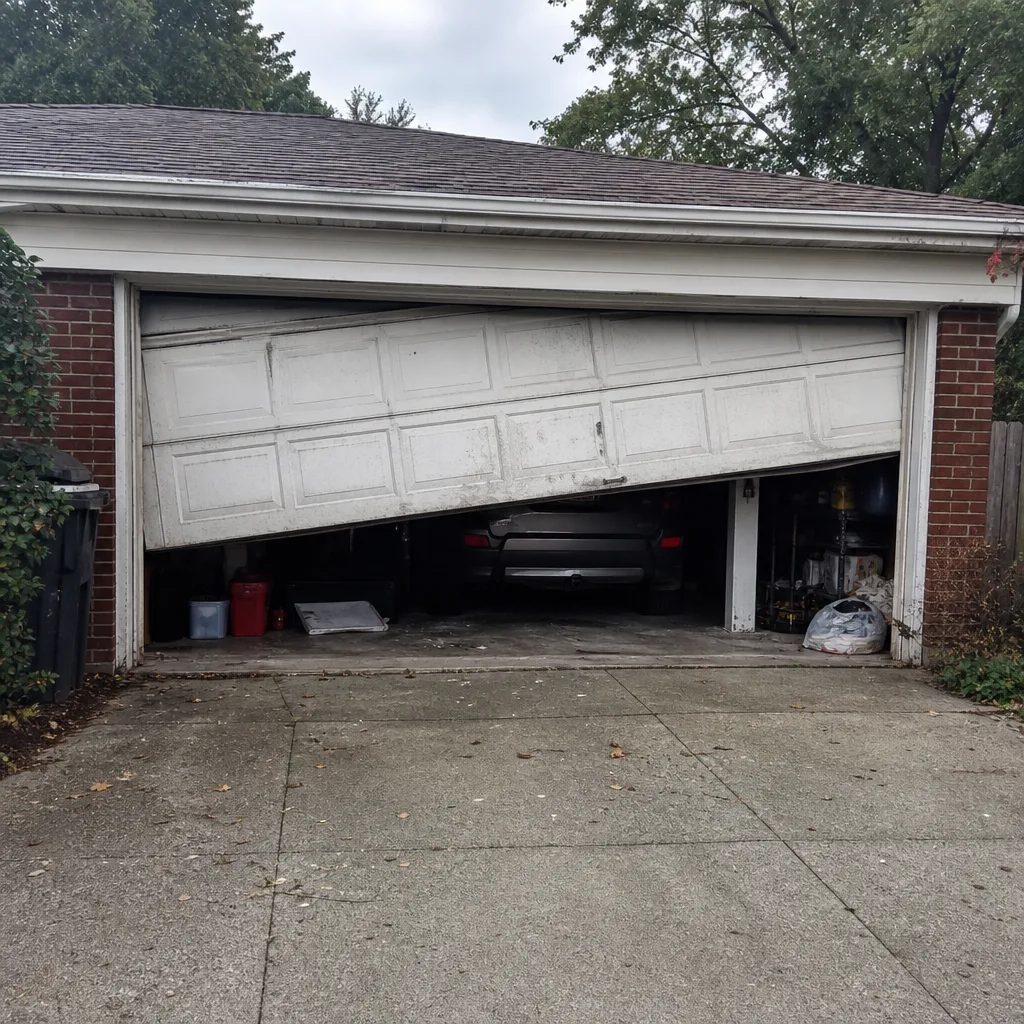 Before
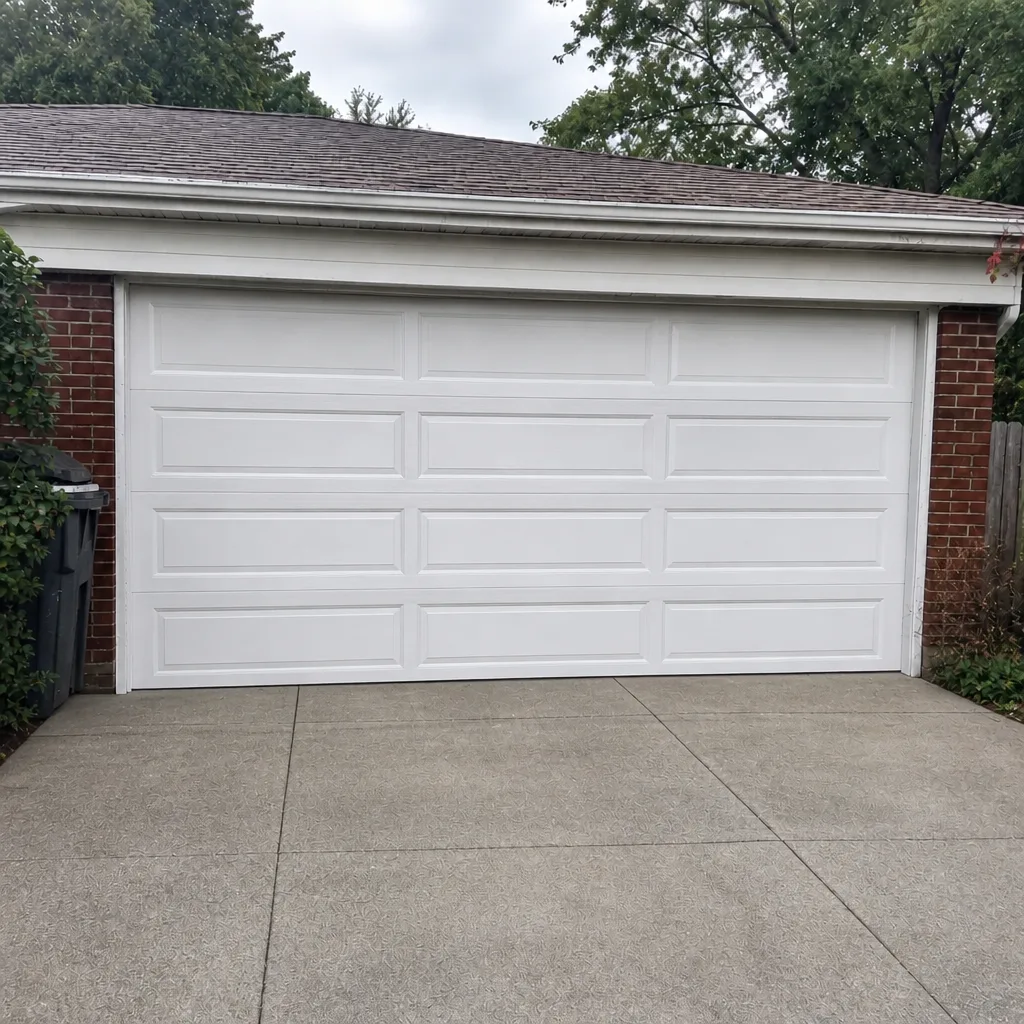 After
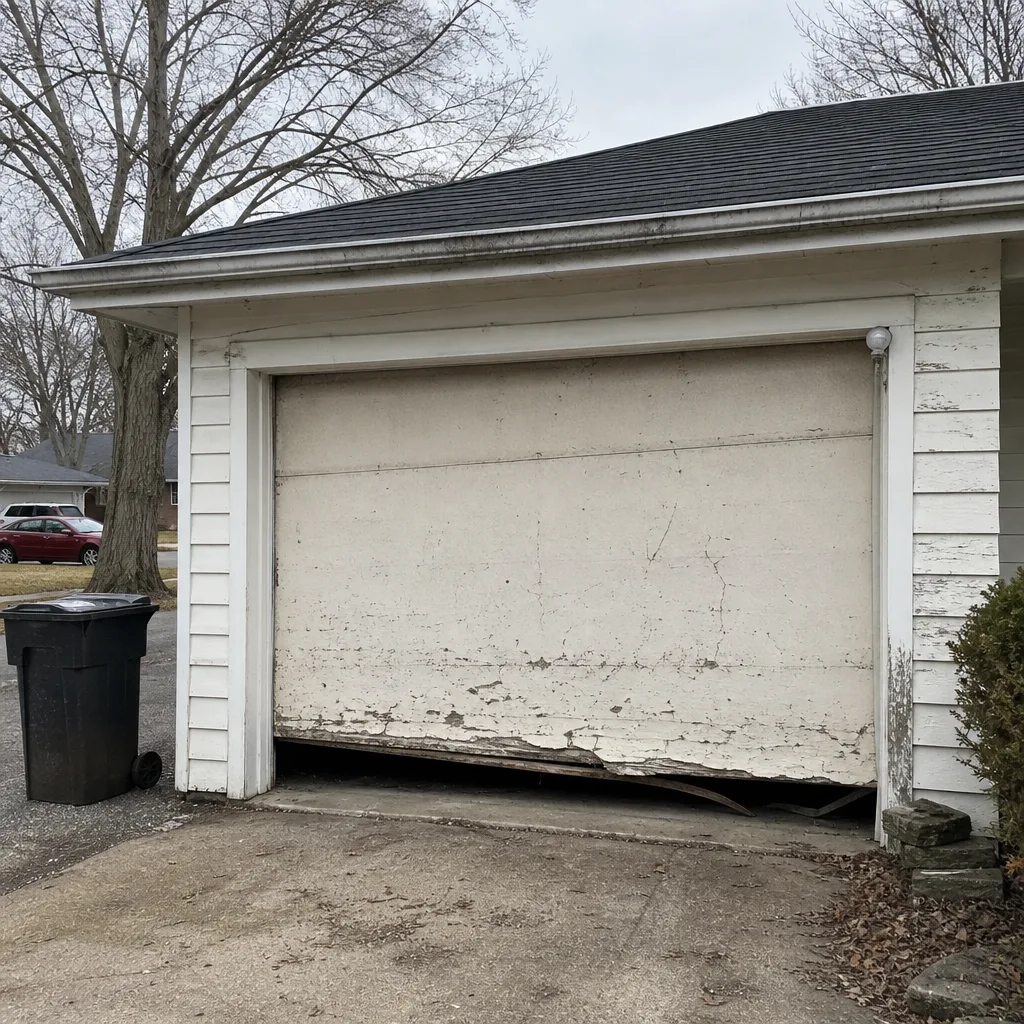 Before
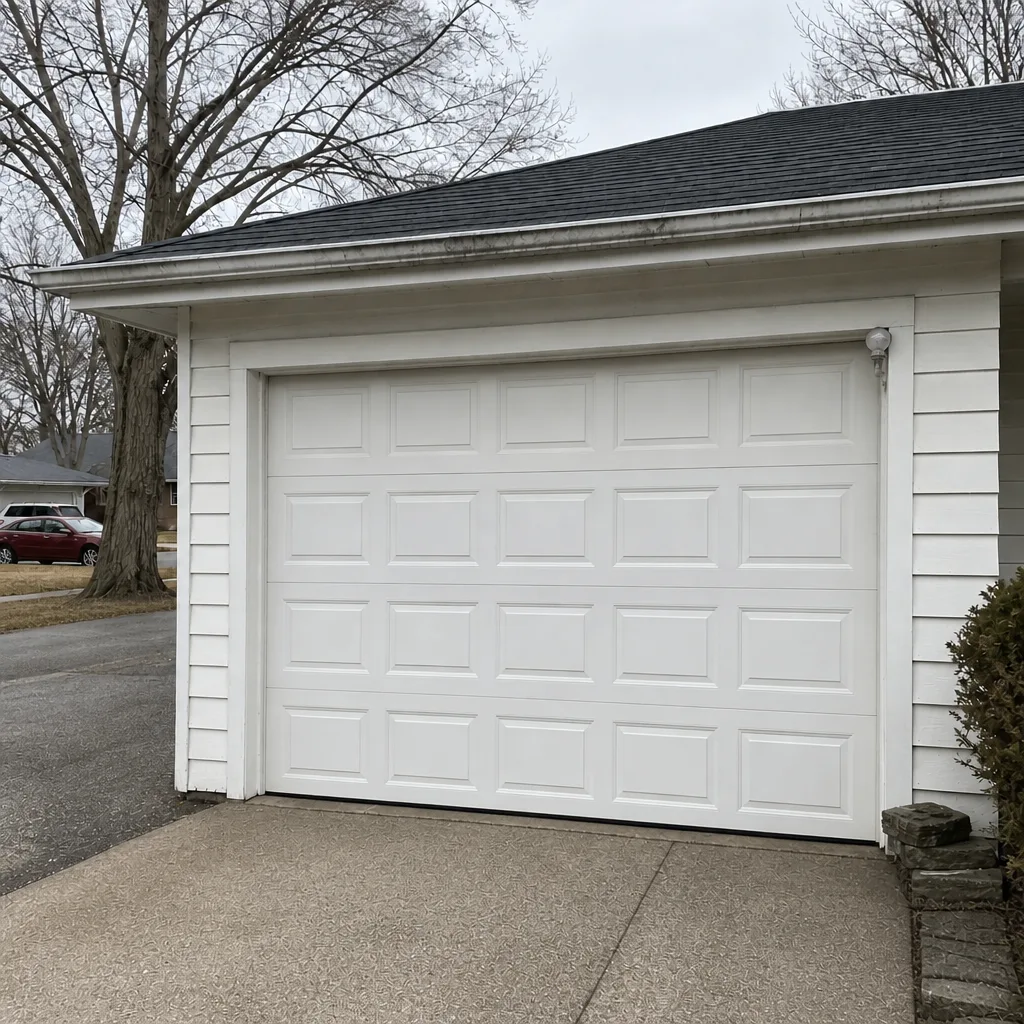 After
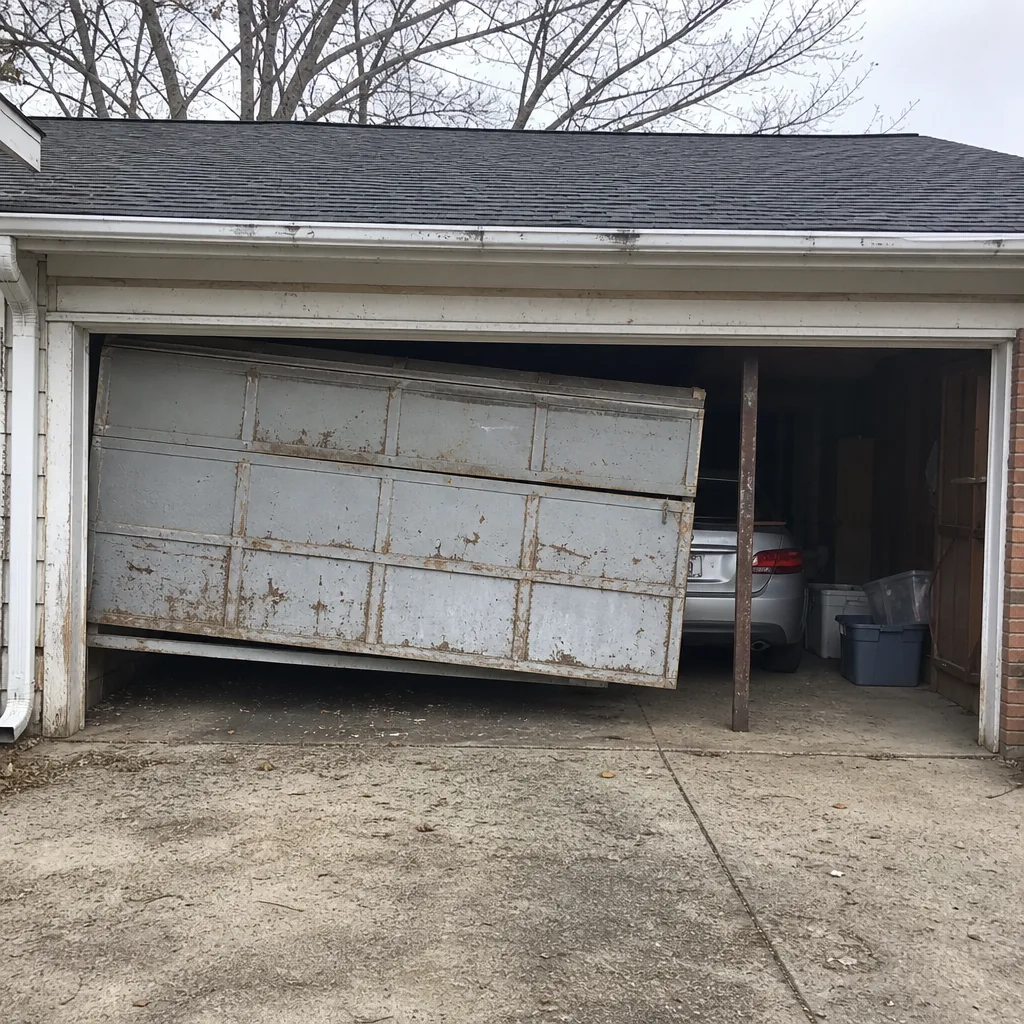 Before
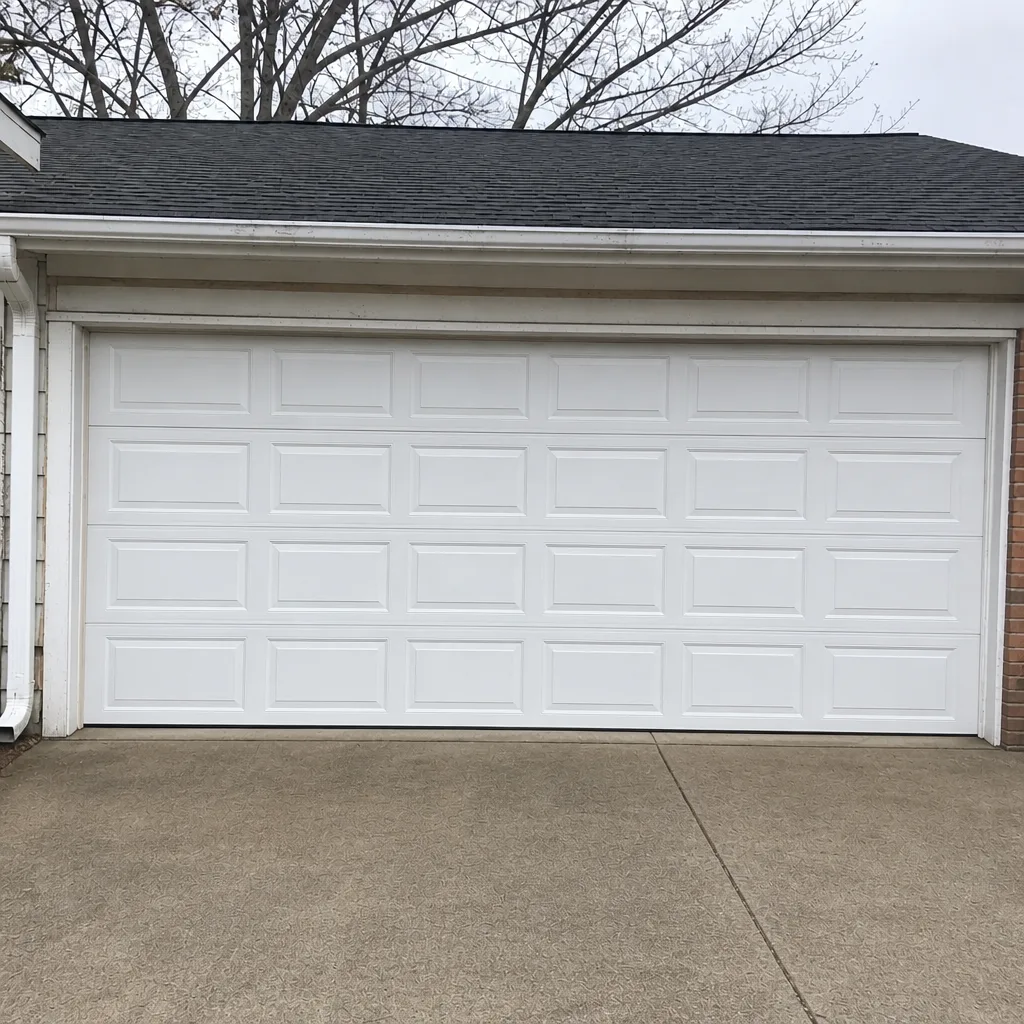 After
When to Call a Professional
Some garage door fixes are safe for a homeowner. Others genuinely aren’t. Call a professional for anything involving the springs, cables, or the torsion assembly – that’s the high-tension, high-injury zone, and it’s not a DIY job. Call us if the door won’t lift or won’t stay closed, if the opener runs but the door doesn’t move, if the door is off its track, or if the panels are bent or the header looks questionable. A stuck door is also a security matter: an open garage leaves the house and whatever’s inside exposed. We handle mechanical repair, opener repair, spring replacement, and full installation in one call, so you don’t need a different contractor for each problem. Oakley Garage Door Repair Pros offers free estimates in Oakley – call (877) 492-3387. We answer 24/7. Fast dispatch from 7am to 7pm, Sunday through Friday.
Frequently Asked Questions
Broken springs are the most common problem we see in Oakley, especially on older doors where the original springs are past their service life. The freeze-thaw swing also accelerates wear on rollers, cables, and the seal along the bottom of the door. Call (877) 492-3387 for a free estimate.
Sometimes, and sometimes not. Many pre-1960s Oakley homes have narrower or lower openings than the modern standard, which may require custom sizing or adapter brackets. A free measure tells you which path applies before you order anything. Call (877) 492-3387 to book one.
Freeze-thaw movement and cold are the usual cause. Cold shrinks metal, stiffens the door’s operation, and can cause the door to stick on a track that’s slightly out of line. It’s also a sign the springs or rollers are wearing and need inspection. Call (877) 492-3387 for an exact quote – estimates are free.
Common repair parts like springs, rollers, and opener components for the major brands are usually available in the Greater Cincinnati area, so repairs are typically scheduled quickly. Full door panels and custom-size doors are special-order and add lead time. We work on LiftMaster, Chamberlain, Genie, Clopay, Amarr, Wayne Dalton, Craftsman, and Raynor, so a model number from your data plate lets us confirm the right part.
No. The written estimate sets the price, and it’s agreed before any work starts. If we find a different problem during the job, we’ll show you what it is and give you a written quote for that work before continuing. Call (877) 492-3387 for a free estimate.
We treat a door stuck open as urgent because it leaves your home exposed, and we offer same-day service for emergency calls. We answer 24/7, with fast dispatch from 7am to 7pm, Sunday through Friday. Call (877) 492-3387 and we’ll get a technician out to secure the door.
The Bottom Line
A garage door in Oakley is a different project depending on your house. Pre-1960s homes need attention to opening size, header condition, and headroom. Newer infill builds usually fit standard sizes and modern openers. Insulated steel holds up best against Ohio’s freeze-thaw cycles, headers matter most when you go from single to double, and reading your data plate before calling saves time and gets the right parts the first time. Springs are precision work and never a DIY job. Repair is usually the right call, and replacement is quoted after a free measure. The price you’re quoted is the price you pay, agreed before work starts. At Oakley Garage Door Repair Pros, we handle repair, opener repair, spring replacement, and installation across eight major brands, so one call covers the whole job.
Ready to fix your door or plan a replacement? Call Oakley Garage Door Repair Pros at (877) 492-3387 for a free estimate in Oakley. Estimates are free, the estimate sets the final price, and we’ll tell you honestly whether a repair or a replacement makes more sense for your door.
Written by the team at Oakley Garage Door Repair Pros.