
Last updated November 20, 2026
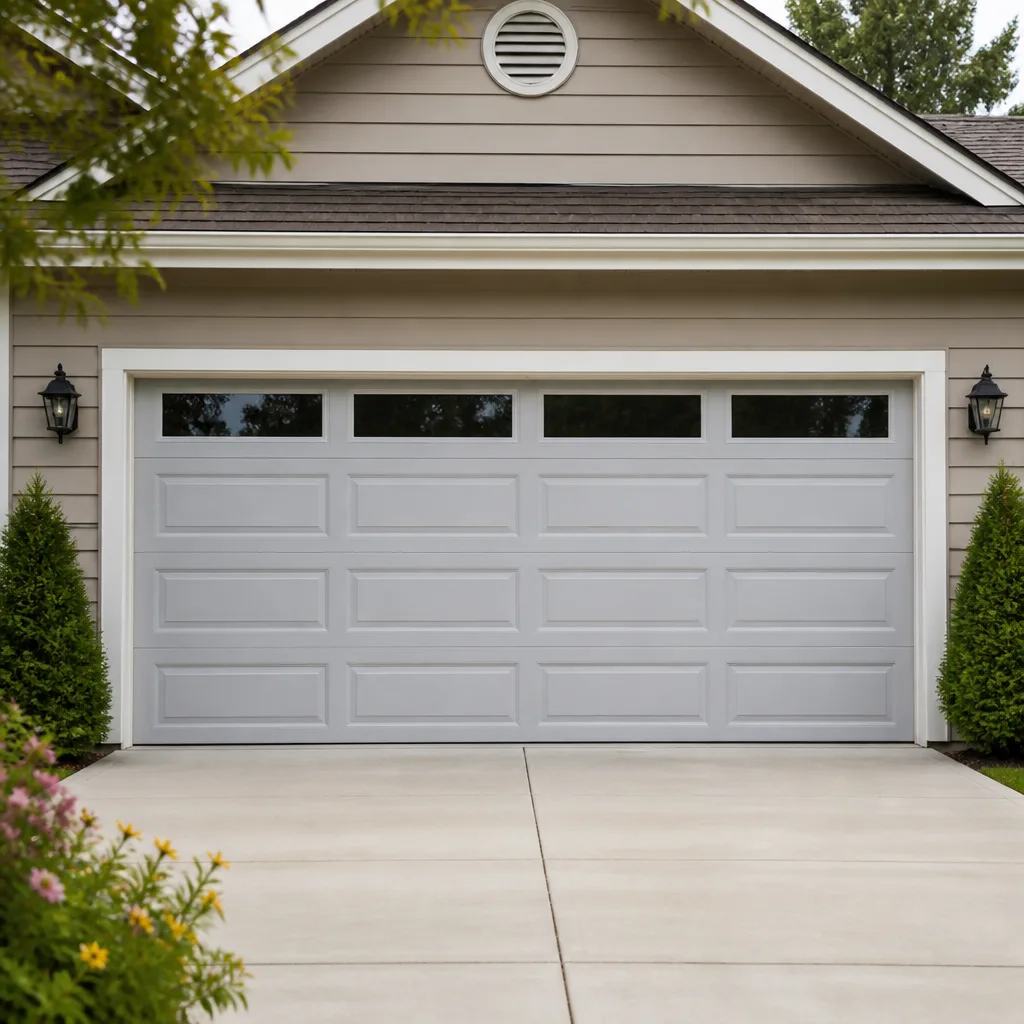 Raised-panel steel
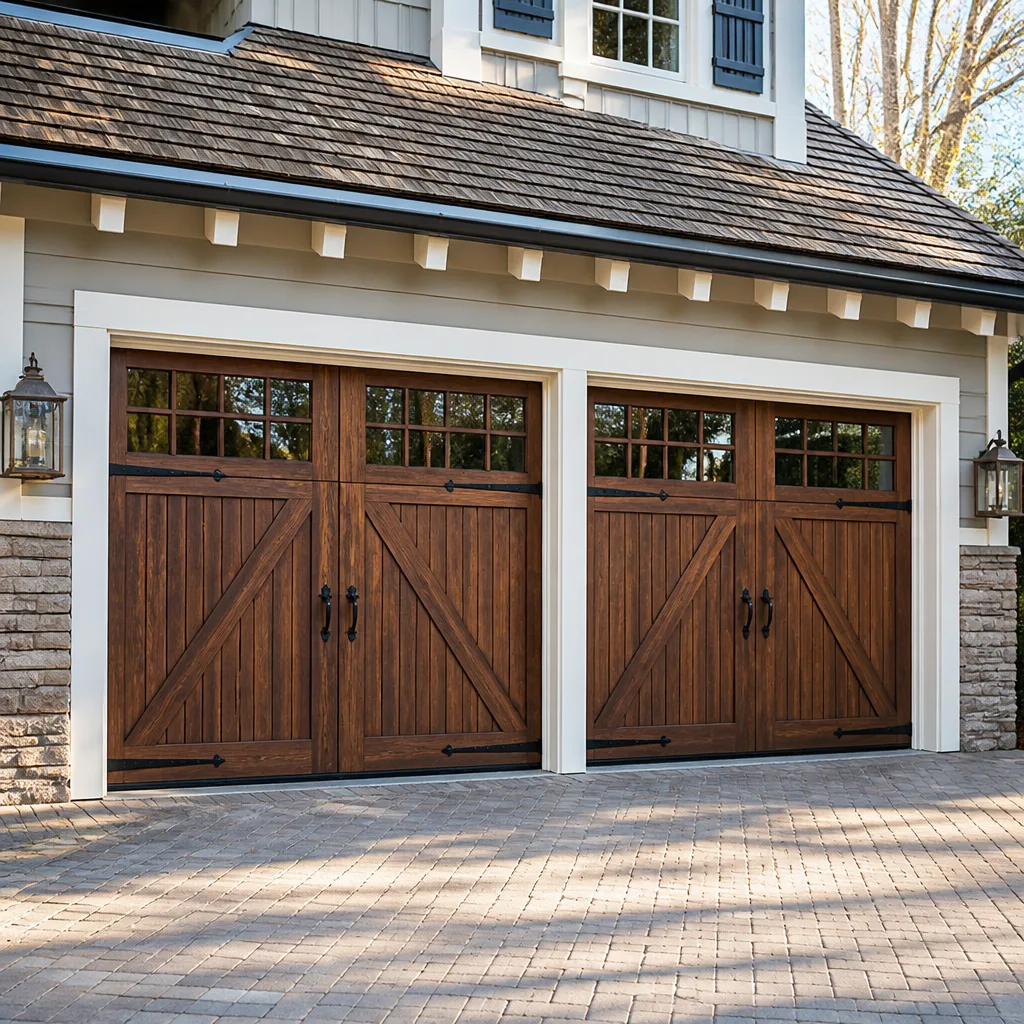 Carriage house
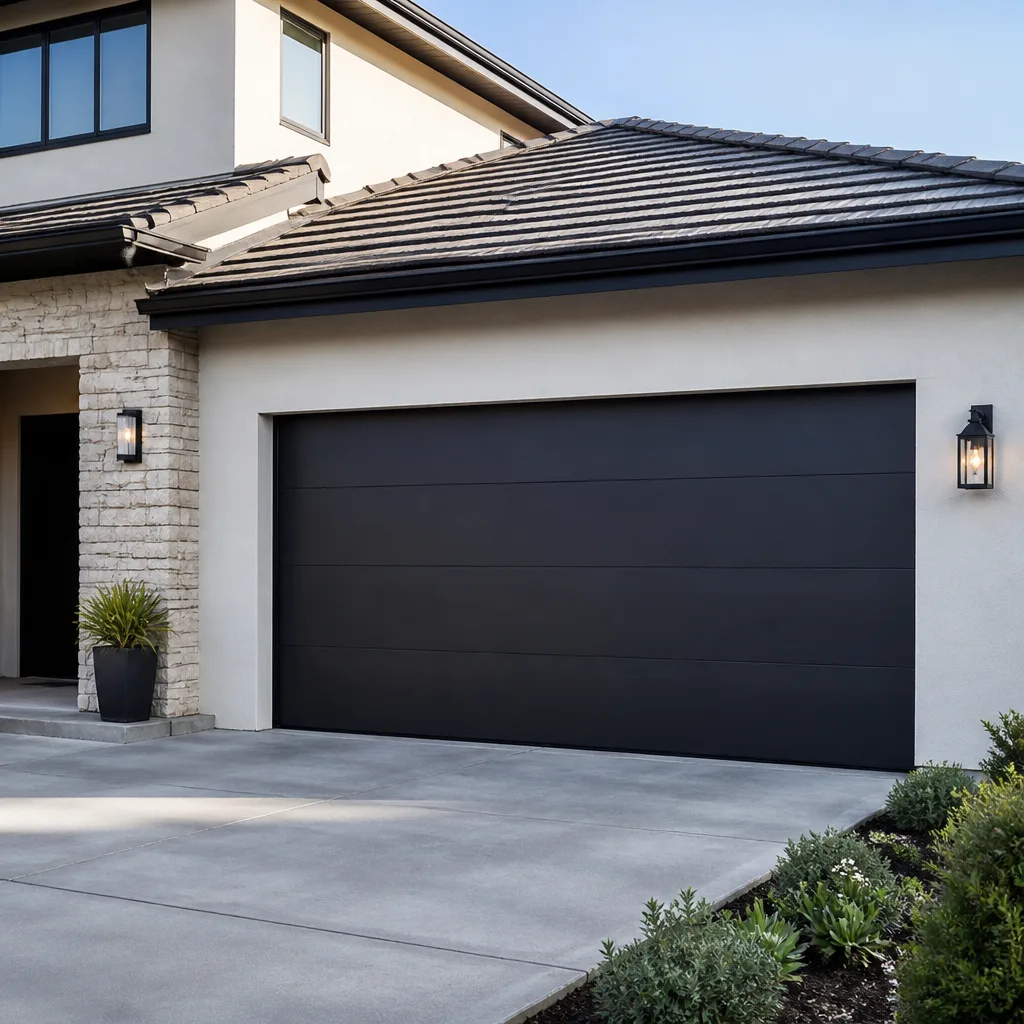 Modern flush
 Full-view glass
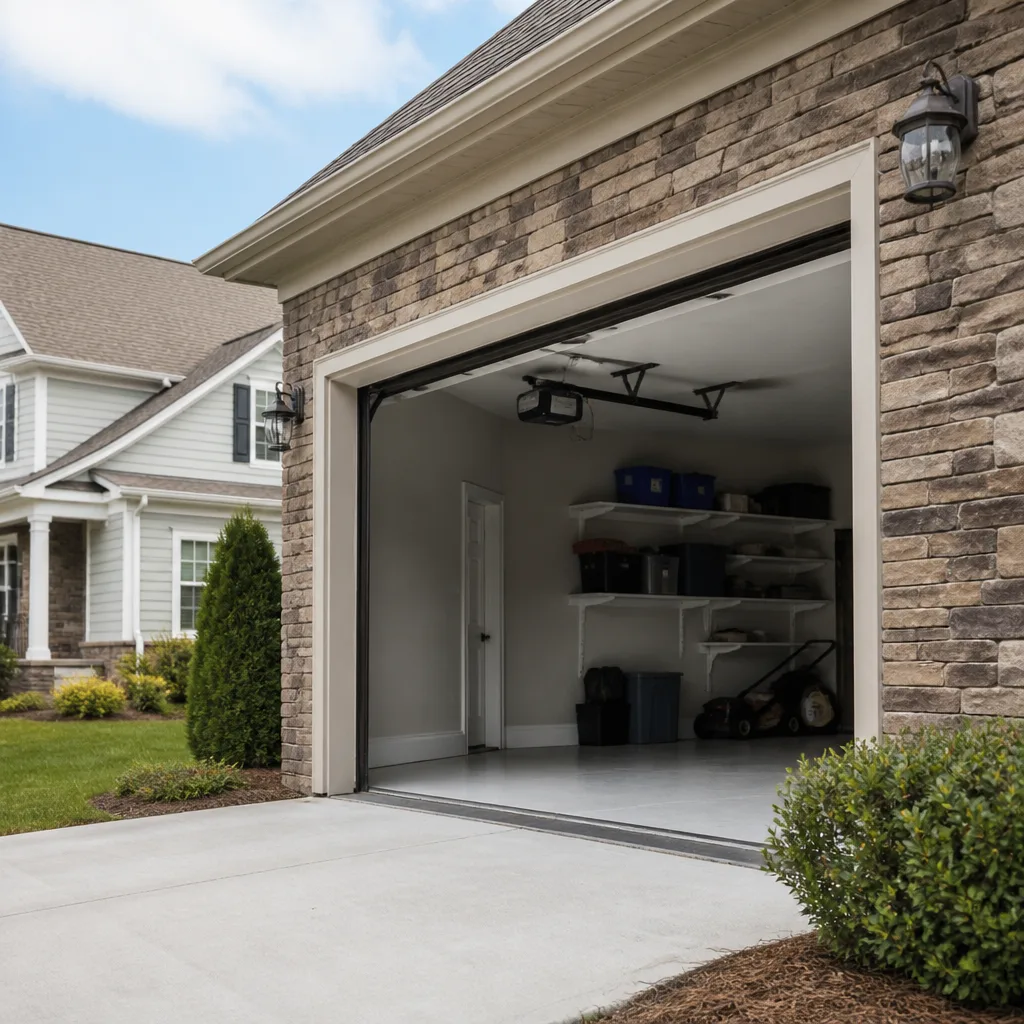 LiftMaster openers
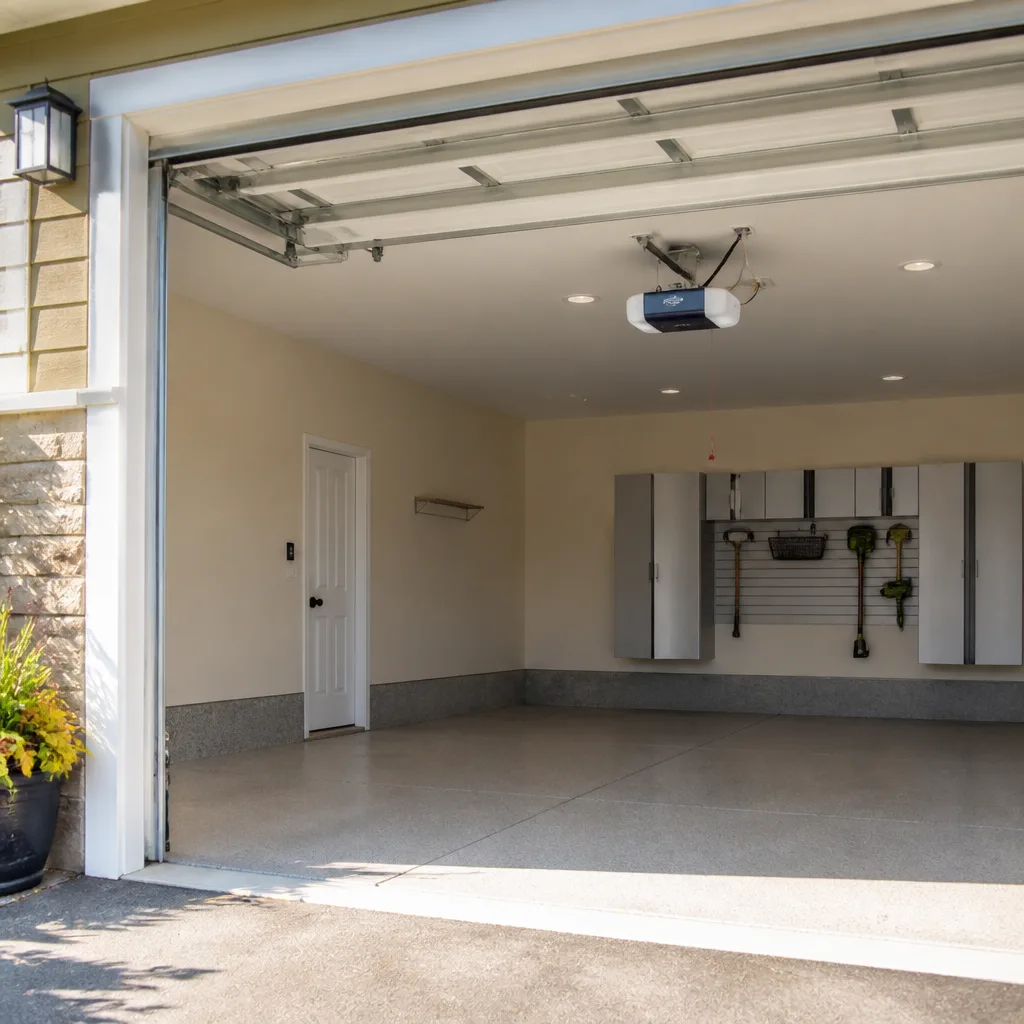 Chamberlain openers
Full 25-point door and opener safety check with every visit - springs, cables, rollers, tracks, and your LiftMaster or Chamberlain opener included
You get a price before we start. It does not change when the pro arrives.
Get your free estimateDIY vs Professional Garage Door: The Oakley Homeowner’s Decision Guide
A torsion spring under full tension stores enough energy to break a wrist or take out an eye if it releases unexpectedly. That’s not a scare tactic. It’s the reason experienced contractors wind springs with steel bars and never with their hands, and it’s the reason the DIY-versus-professional question here isn’t about pride or saving money. It’s about physics and liability. Some garage door jobs are genuinely safe for a careful homeowner with a Saturday and a ladder. Others are objectively the wrong call no matter how handy you are. This guide draws that line clearly for Oakley homeowners, names the jobs on each side, and shows you where the real costs sit. You’ll finish knowing exactly which repairs you can take on and which ones you should hand to a pro.
Quick Answer
In Oakley, most routine garage door maintenance is safe for a homeowner to do: lubrication, weatherstripping, safety sensor alignment, and remote reprogramming. Torsion spring replacement, cable replacement, and track realignment after an impact are not DIY jobs at any skill level, because the stored energy and tension in those parts can cause serious injury. The break-even usually falls on cost too: the specialized tools for safe spring work cost close to what a professional repair does, so DIY stops making economic sense past the basics. For anything involving springs, cables, or a door that’s come off its track, call a pro: (877) 492-3387.
Styles & brands we work with
- Raised-panel steel
- Carriage house
- Modern flush
- Full-view glass
- LiftMaster openers
- Chamberlain openers
Table of Contents
- Why Garage Door Repair Is a Physics Problem, Not a Pride Problem
- The DIY-Safe Jobs (and the Exact Products We Recommend)
- The No-DIY Jobs and Why the Physics Says Stop
- The Tool Cost Reality Check
- How Ohio Homeowner Insurance Treats DIY Garage Door Injuries
- The Middle Path: Diagnose and Source Parts Yourself
- Oakley Climate and Housing: What Your Door Actually Deals With
- Opener Work: Where DIY Gets Tricky Fast
Why Garage Door Repair Is a Physics Problem, Not a Pride Problem
Most home repairs reward confidence. A garage door rewards respect for stored energy. A torsion spring is a coiled steel spring wound under tension that counterbalances the entire weight of the door. When it’s under full tension, it holds roughly 100 foot-pounds of torque. Extension springs, the other common type, stretch along the tracks and hold similar force. When either one fails under load, the energy releases all at once, in a fraction of a second, and anything in the path takes the hit.
That’s why the trade has hard rules. Technicians wind torsion springs with two steel winding bars inserted into the cone, alternating them, keeping their bodies out of the spring’s line of fire. They never grip the spring with a hand or a screwdriver, because a screwdriver can slip out of the winding cone and the bar can whip. Cable work carries a parallel risk: cables are under tension from the spring system, and a cable that comes free under load can whip across the garage.
None of this means garage doors are dangerous to own. A properly installed, properly maintained door is one of the safest systems in a house. It means the danger sits in a very specific set of parts, and those parts have a clear boundary around them. On one side: cleaning, sealing, adjusting, programming. On the other: springs, cables, and a door that’s jumped its track. Knowing which side you’re on is the whole decision.
In our experience across Oakley, the calls that go wrong are almost never from homeowners who tried to lubricate a hinge. They come from homeowners who watched a video and decided a torsion spring looked manageable. It looks manageable right up until it isn’t.
The DIY-Safe Jobs (and the Exact Products We Recommend)
These are the jobs a competent homeowner can do safely, with basic tools and no specialized equipment. They also happen to be the maintenance tasks that prevent the bigger, more dangerous failures down the road, so doing them yourself is a genuine win. Here’s the list, with the products that actually hold up in an Ohio garage.
1. Lubrication
Once or twice a year, lubricate the hinges, rollers, and the torsion spring itself with a garage-door-specific lubricant. We recommend a lithium grease spray or a silicone-based garage door lubricant, not WD-40, which is a solvent and will strip the existing grease rather than replace it. White lithium grease in a spray can is the standard choice for hinges and rollers. A dry silicone spray works well on the spring and on nylon rollers.
2. Weatherstripping Replacement
The bottom seal on your door takes a beating from Ohio’s freeze-thaw cycles. When it’s cracked or flattened, cold air, water, and pests get in. Replacement vinyl or rubber bottom seals are widely available and slide into the retainer on the bottom of the door. Measure the door width first, buy the seal to match, and slide it in. The side and top seals are similarly straightforward.
3. Safety Sensor Alignment
The two small photo-eye sensors near the floor on each side of the door should face each other and light up steadily when aligned. If the door won’t close, or closes and reverses, a bumped sensor is the first thing to check. Loosen the wing nut, aim the sensor, tighten, and confirm the indicator light is solid on both sides. Cleaning the lens with a soft cloth solves more of these than anything else.
4. Remote and Keypad Reprogramming
Lost a remote, bought a new one, or changed the keypad code? Reprogramming is a homeowner job. On a LiftMaster or Chamberlain opener, you press the learn button on the motor head, then press the remote button within the window it allows. Craftsman openers follow a similar pattern. The manual for your specific model is the reliable guide, and most brands publish it online.
5. Visual Inspection
Twice a year, look at the door with it closed and then open. Check for frayed cables, worn rollers, gaps in the weather seal, and a door that looks out of level. You’re not fixing anything here. You’re catching the problems that need a pro before they become a failure.
The No-DIY Jobs and Why the Physics Says Stop
These are the jobs where DIY is the wrong call regardless of skill level, strength, or confidence. The reason isn’t that the work is complicated to understand. It’s that the failure mode is violent and instant, and there’s no second chance to get it right.
Torsion Spring Replacement
This is the single most dangerous job on a garage door. The spring must be wound to a precise number of turns to counterbalance the door’s weight, and the winding process itself is where injuries happen. If the winding bars slip, or the spring is mismatched to the door’s weight, or the technician’s grip fails mid-wind, the energy releases. We’ve covered the specifics of safe spring replacement on our garage door spring repair page, and the short version is: springs must be matched by wire gauge, inside diameter, and length to the specific door, and then wound with bars. A spring bought off a shelf by “looks about right” is a hazard. Our technicians have up to 8 years of experience winding these safely, and even they treat every spring as a live component.
Cable Replacement
The cables are what connect the spring system to the bottom of the door. They’re under tension any time the spring is wound. A cable that snaps free under load can whip across the garage at speed. Replacing a cable safely requires releasing the spring tension first, which puts you right back in torsion spring territory. Cables also have to be replaced in matched pairs, because an old cable and a new one don’t share the same stretch.
Track Realignment After Impact
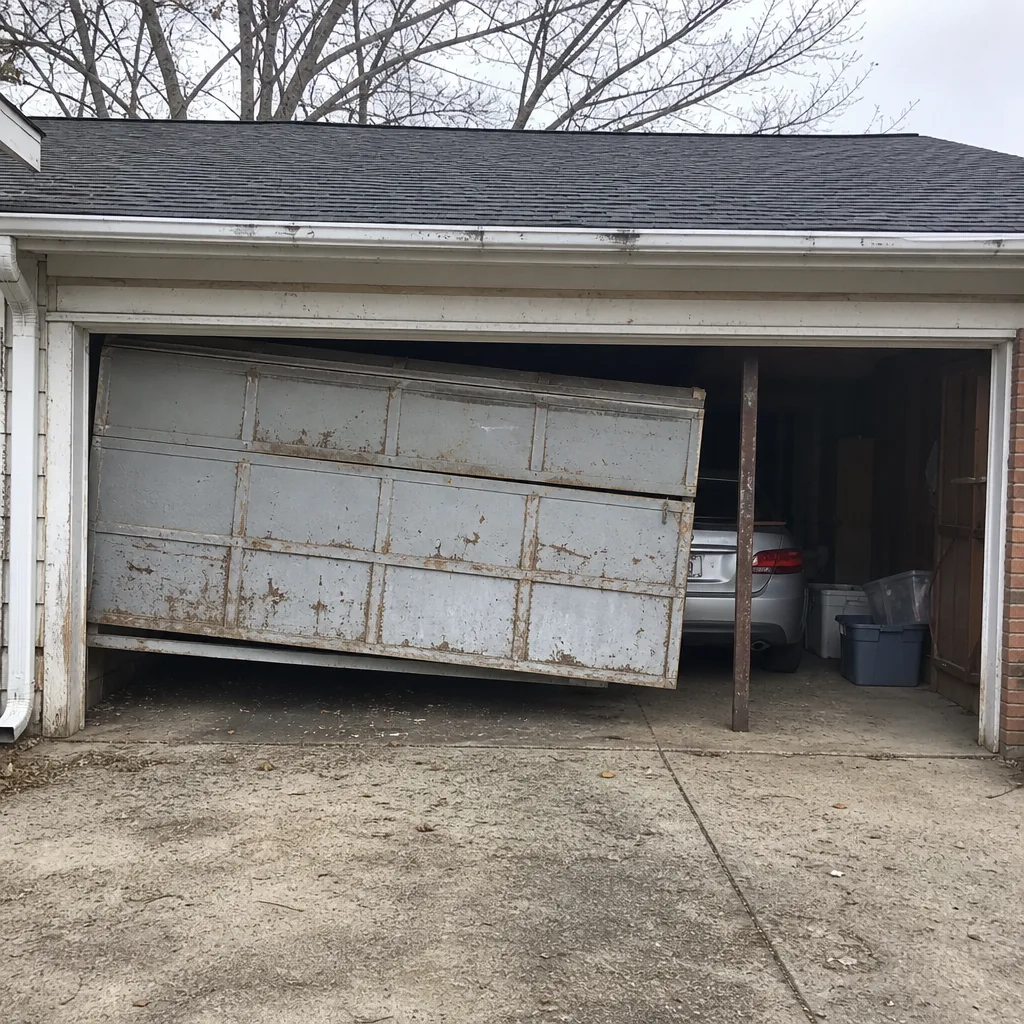
If a car has bumped the door or something has struck the track, the track is now bent out of its original line. Bending it back by hand feels intuitive and is almost always wrong: the steel work-hardens and cracks, and the door can drop off the track entirely. Realignment is a measure-and-set job with the door off the track. A door that’s jumped its track and is hanging by one side is an emergency, not a project.
Panel Replacement and Spring-to-Door Matching
Replacing a damaged panel on a Clopay, Raynor, or Amarr door means matching the panel to the door series, the color lot, and the hinge style. Getting it wrong leaves a door that binds. This is a job where sourcing the part is easy but fitting it so the door runs true is the hard part.
The Tool Cost Reality Check
Here’s the part most DIY guides skip. Safe torsion spring work requires tools a homeowner doesn’t own and won’t use again, and those tools cost close to what the professional job does. This is the economic argument, separate from the safety one.
- Winding bars (pair): The correct tool for winding torsion springs. Sold in pairs, and the “one bar” workaround is a known cause of injury.
- Torsion spring scale or wire gauge tool: Needed to match the replacement spring to the door’s weight. Without it, you’re guessing.
- Properly rated winding cone set: Sometimes needed if the original cones are worn.
- Safety glasses and gloves rated for the work: Basic, but the cost adds up.
- Spring clamp and cable puller: Needed for cable work, and only used once.
Add up the tools and compare to what a professional spring repair actually costs, and the math is uncomfortable. You’re buying tools you’ll use once, taking on the highest-risk job on the door, and if the spring is wrong you’re buying it again. The break-even leans toward the pro in most cases. The one exception is the homeowner who genuinely wants to build a shop toolkit for future work. If that’s you, buy the tools and learn from a technician who’ll let you watch. Don’t learn from a video.
How Ohio Homeowner Insurance Treats DIY Garage Door Injuries
This is the part nobody thinks about until something goes wrong. Your Ohio homeowners policy is written to cover injuries and damage arising from your home, but how it responds changes when the injury is to you and the work was your own DIY project. Here’s the shape of it:
- Injury to you from your own DIY work is typically handled under the medical payments portion of your policy, subject to your deductible and limits. It’s not the same as a liability claim, and the payout is usually modest.
- Injury to a family member or guest from your DIY repair is where it gets serious. If a spring you installed fails and injures someone else, your liability coverage comes into play, but the insurer will ask whether the work was done to a professional standard. A DIY spring that was mismatched to the door is exactly the fact pattern an adjuster flags.
- Damage to the door itself from a botched DIY repair is generally excluded or subject to your deductible, because most policies treat the thing being worked on as the thing being repaired, not a covered loss.
- Injury to a contractor working on your property is normally covered under the contractor’s own liability policy, with your policy as the backup. That’s part of why hiring a licensed, insured pro protects you.
We can’t quote your policy and won’t pretend to. The practical takeaway is this: a professional repair transfers the risk of the dangerous work to the pro’s insurance. A DIY spring repair keeps the risk in your garage and, if it goes wrong, in your policy. Read your own declarations page and call your agent with the specific question. Most agents will walk you through it in five minutes.
The Middle Path: Diagnose and Source Parts Yourself
There’s a productive middle ground that saves money without risking your hands. You can do the diagnosis and the parts sourcing, then hand the actual dangerous work to a pro. Here’s how to make that work in practice.
Step 1: Diagnose the symptom
- Close the door and look at the torsion spring above the door or the extension springs along the tracks.
- Press the opener remote. If the motor runs but the door doesn’t move, the issue is likely the spring, the cable, or the opener’s gear and sprocket.
- Pull the manual release (the red cord) and try lifting the door by hand. A properly balanced door lifts with one hand and stays where you put it. A door that feels extremely heavy or refuses to stay up has a spring problem.
- Look at the photo-eye sensors. A solid light on both means they’re aligned. A blinking or off light means a sensor issue.
- Write down the door brand and the opener brand and model. Check the stickers on the door panels and the motor head.
Step 2: Source the right parts
Once you know the brand, the parts are traceable. A Clopay door needs a Clopay panel of the correct series. A LiftMaster or Chamberlain opener needs the matching logic board or gear kit. A Raynor door needs a Raynor bottom seal or hinge. This is where a brand-specialist shop like ours saves you time, because we already know which parts cross-reference to which door.
Step 3: Hand off the dangerous work
When you call, tell the technician what you’ve diagnosed and what you’ve sourced. That conversation shortens the job and often lowers the price. It also means the technician arrives knowing what they’re looking at, which is why we service equipment from eight major manufacturers, including LiftMaster, Chamberlain, Craftsman, and Raynor, so we’re not learning your door on your dime. That’s what full-service means in practice: the same team handles garage door repair, opener work, springs, and garage door installation, so you’re not calling three different vendors for one door.
Oakley Climate and Housing: What Your Door Actually Deals With
Oakley sits in a part of Ohio that swings hard between seasons, and most of the wear we see on local doors comes from that swing rather than from any single event. The practical effects:
- Freeze-thaw cycles work on the bottom seal and the weatherstripping every winter. Vinyl seals crack and flatten, and the door starts letting in cold air and water. Replacing the bottom seal is a homeowner job and worth doing before the first hard freeze.
- Summer heat and humidity expand wood door panels and can cause steel tracks to shift slightly. A door that binds in July and runs free in October is usually a track or hinge issue, not a spring issue.
- Fall leaf debris and grit get into the roller tracks and wear the rollers faster. Cleaning the tracks with a brush and a dry lubricant is a homeowner job.
- Winter ice at the bottom of the door can freeze the bottom seal to the floor. Don’t force the opener through it. A rubber mallet on the seal, or a gentle pry, frees it without damage.
Older Oakley homes often have doors installed decades ago with the original springs still in place. A spring has a finite cycle life, and a door that’s cycled tens of thousands of times is on borrowed time. If your door is original to an older Oakley house and you don’t know the spring’s history, have it inspected before you need it.
Opener Work: Where DIY Gets Tricky Fast
Opener repair is a middle case. Some of it is homeowner-safe, and some of it isn’t. The dividing line is the electrical side and the drive mechanism.
Safe for homeowners
- Reprogramming remotes and keypads.
- Replacing the battery in the remote.
- Cleaning the photo-eye lenses.
- Adjusting the opener’s travel limits and force settings using the manual (this is a settings change, not a repair).
Not safe for homeowners
- Replacing the logic board or capacitor: A capacitor can hold a charge after power is off. A logic board replacement means working inside the housing with live-adjacent components.
- Troubleshooting the wall control wiring: Low-voltage, but a miswire can damage the board and a homeowner can’t safely test it without the right meter.
- Replacing the drive gear or sprocket on a chain-drive opener: The chain is under tension and the assembly is heavy.
- Any opener that’s tripping a breaker: That’s an electrical issue, not a garage door issue. Call a licensed electrician.
We repair openers from LiftMaster, Chamberlain, Genie, and Craftsman, which means we keep the smart-home features working when we replace a board or a gear, and we know which models are worth repairing versus replacing. If you’re on the fence about a 15-year-old opener that’s failed twice, our garage door opener repair team can tell you straight. We’d rather repair what’s repairable and tell you when it’s not.
Common Mistakes to Avoid
- Winding a torsion spring with a screwdriver. The screwdriver slips out of the winding cone, and the bar that replaces it is the only safe tool. This is the single most common cause of serious garage door injury, and it happens to experienced homeowners too.
- Buying a spring “by looks.” Torsion springs are matched to the door’s weight by wire gauge, inside diameter, and length. A spring that’s close but not right will cycle the door unevenly and fail early. Match the part to the door, not the shelf.
- Replacing one cable instead of the pair. Cables stretch at the same rate. A new cable paired with an old one pulls the door out of level and loads the spring unevenly.
- Greasing the tracks. Tracks should be cleaned, not greased. Grease collects grit and dirt, which wears the rollers. Use a dry lubricant or a brush, and save the grease for the hinges and spring.
- Forcing a frozen door through ice. In an Oakley winter, a bottom seal can freeze to the floor. Forcing the opener strains the motor and the spring. Free the seal first.
- Bending a bent track back by hand. Steel track work-hardens and cracks. A door that’s come off the track should not be forced back on. Call a pro.
- Ignoring a door that reverses on its own. A door that closes and then reverses is telling you the sensors or the force setting is wrong. That’s a safety issue, not an annoyance, and it’s worth a same-day call.
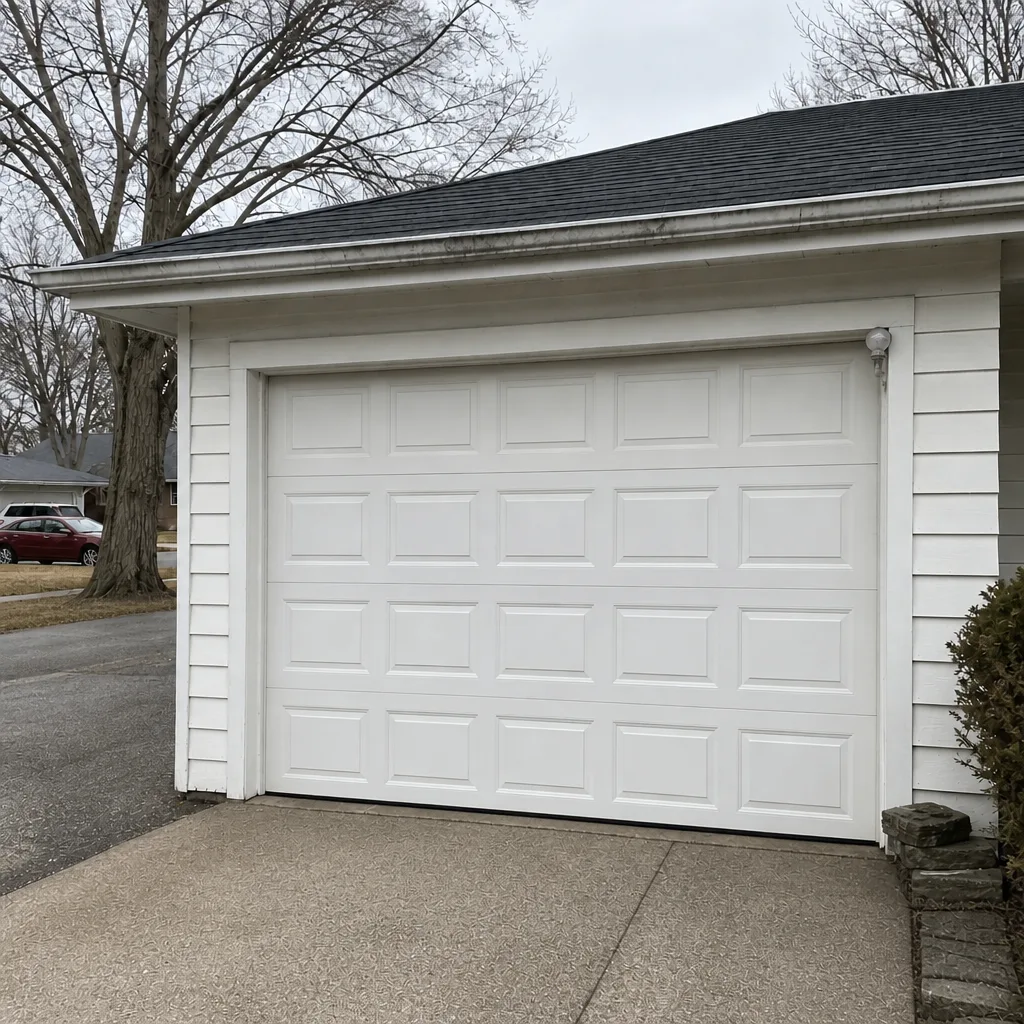
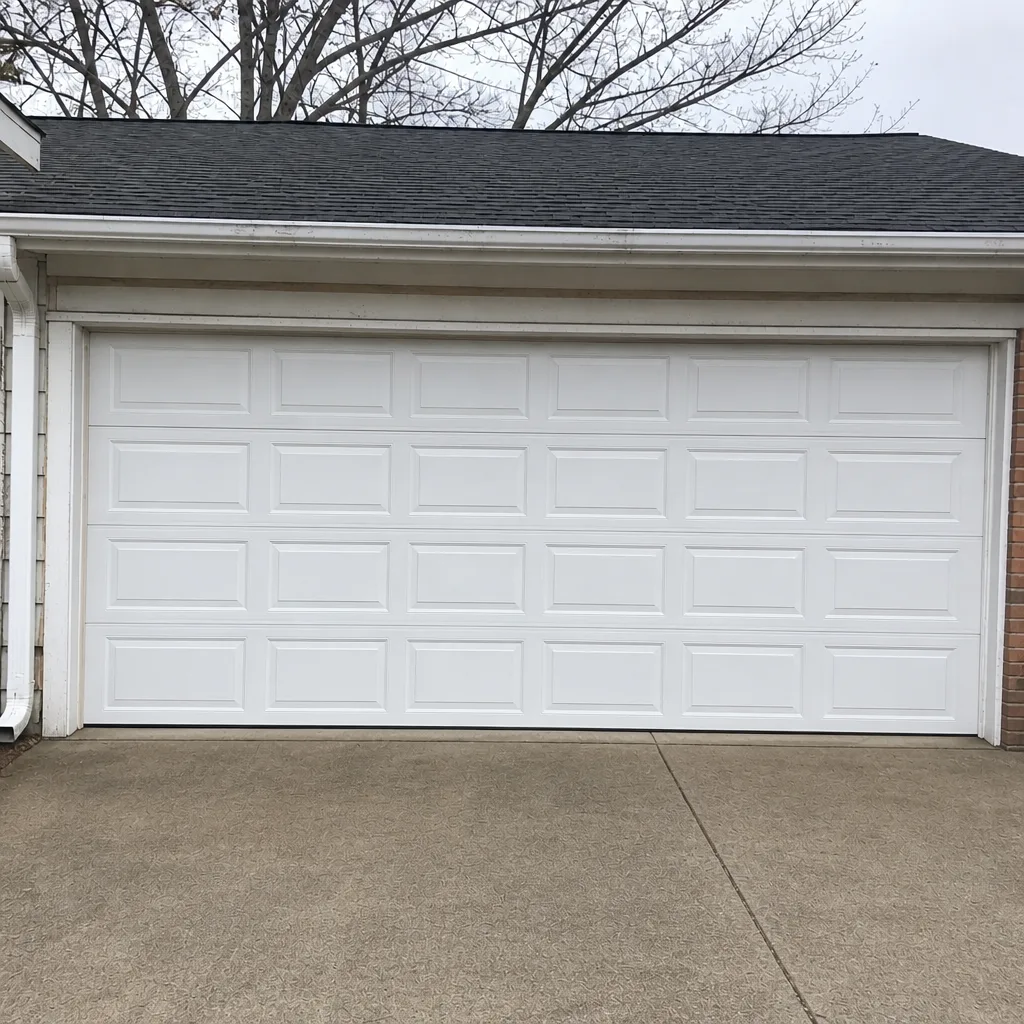
See the difference
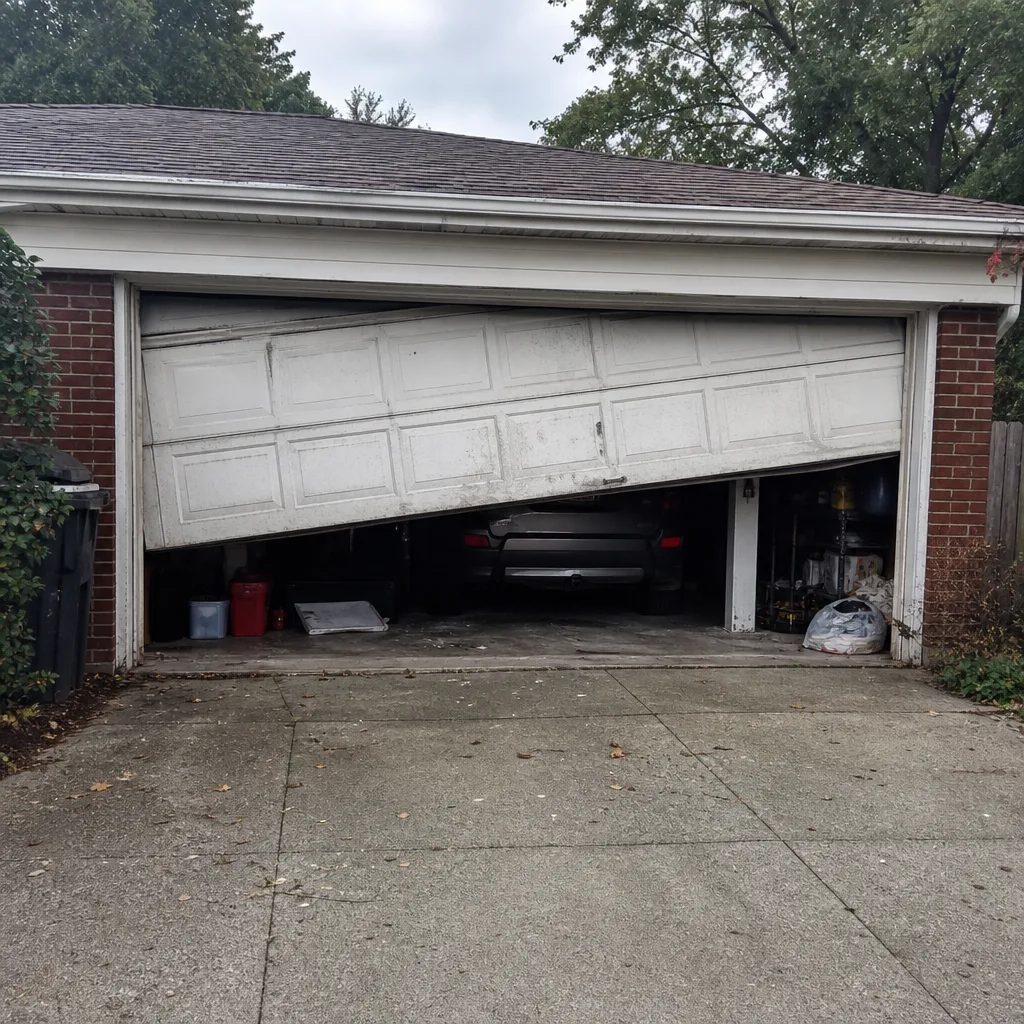 Before
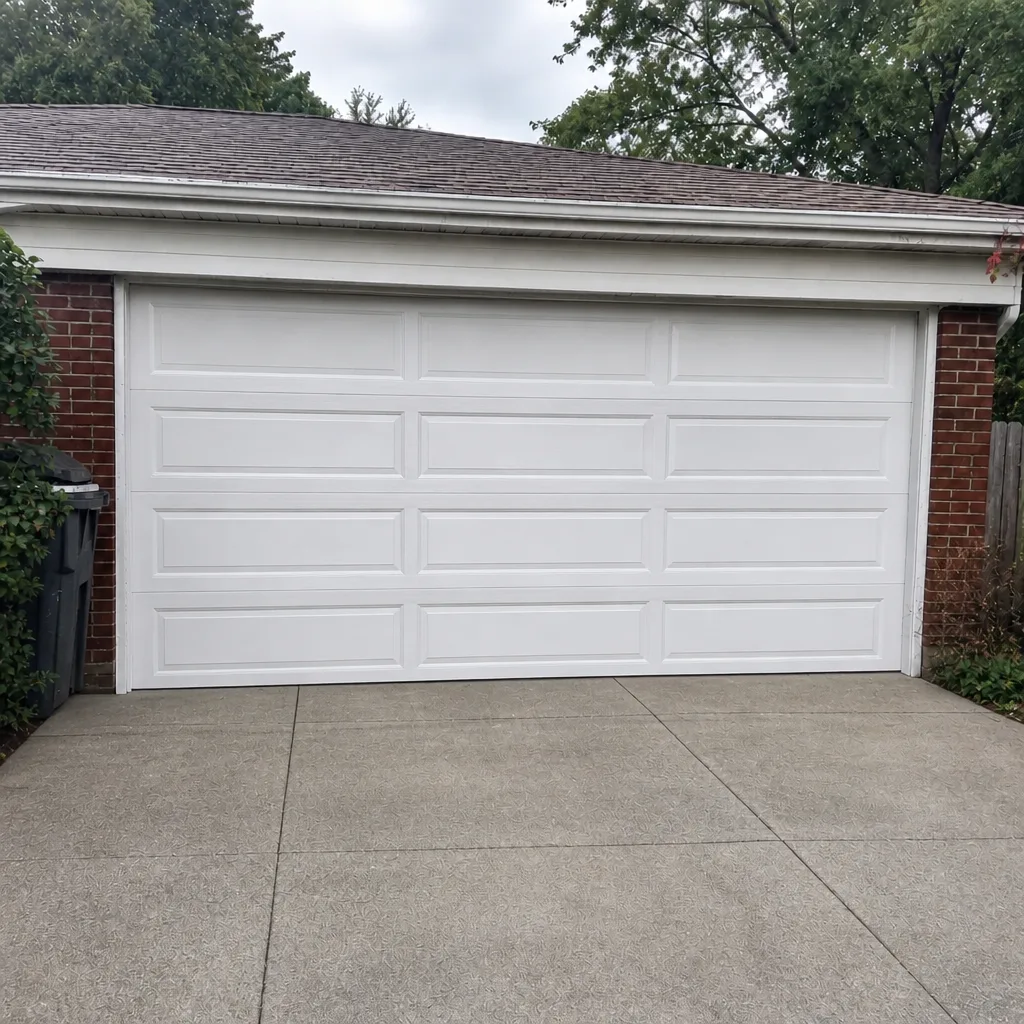 After
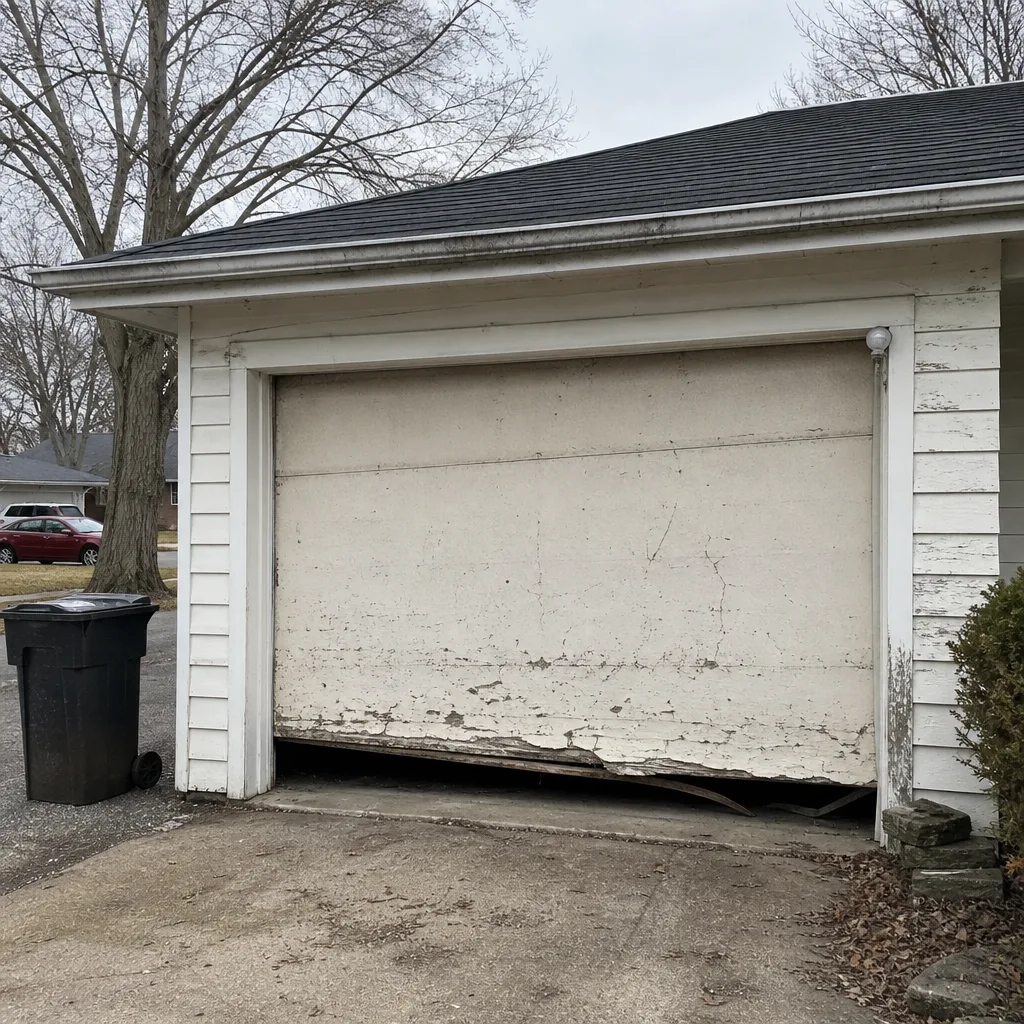 Before
 After
 Before
 After
When to Call a Professional
Call a professional for any job involving springs, cables, a door that’s jumped its track, or a panel replacement that has to fit a specific door series. Call immediately, not tomorrow, if a spring has visibly broken and the door is hanging, if the door is stuck open and the house is exposed, or if the opener is running but the door isn’t moving. We offer emergency garage door service for exactly those situations. On the routine side, call when you want a free measure and a written price for a new door or a spring replacement, or when you’re on the fence and want a straight answer about whether the job is worth doing yourself. Oakley Garage Door Repair Pros offers free estimates in Oakley. Call (877) 492-3387. We answer 24/7. Fast dispatch from 7am to 7pm, Sunday through Friday, and we’re closed Saturday. The price is quoted and agreed before any work starts, so the written estimate is what you pay.
Frequently Asked Questions
No. Torsion spring replacement is the highest-risk job on a garage door because the spring stores enough energy to cause serious injury if it releases unexpectedly, and it must be wound to a precise number of turns to match the door’s weight. The correct tools are steel winding bars, used with the body clear of the spring’s line of fire. Even experienced technicians treat every spring as a live component. If your spring has broken, call (877) 492-3387 and we’ll schedule a repair.
Spring repair pricing depends on the door’s weight, the spring type, and whether it’s one spring or a matched pair. A torsion spring is normally replaced in pairs, since matched springs share the load and cycling. We don’t quote a number until we’ve seen the door, because the estimate is written and agreed before work starts. Call (877) 492-3387 for an exact quote, and the estimate is free.
Yes. Lubrication is one of the safest and most valuable homeowner jobs on a garage door, and doing it once or twice a year prevents wear on the hinges, rollers, and spring. Use a garage-door-specific lithium or silicone lubricant, not WD-40. Keep the tracks clean and dry rather than greased. If you’re not sure what your door needs, call (877) 492-3387 and we’ll tell you what to look for.
No. A door that’s come off its track is under uneven load from the springs and cables, and forcing it back on can crack the track or drop the door. This is an emergency situation because the house is exposed. Call (877) 492-3387. We answer 24/7, and we offer emergency garage door service for exactly this. A call outside dispatch hours is booked into the next opening, Sunday through Friday, 7am to 7pm.
It depends on the injury and the policy. Injury to you from your own DIY work is typically handled under the medical payments portion of your policy, subject to your deductible and limits. Injury to someone else from a DIY repair you did can be a liability question, and the insurer will look at whether the work was done to a professional standard. We can’t quote your policy. Read your declarations page and call your agent with the specific question. If you’d rather transfer the risk of the dangerous work to a pro’s insurance, call (877) 492-3387.
Yes. We service equipment from eight major manufacturers, including LiftMaster, Chamberlain, Genie, Clopay, Amarr, Wayne Dalton, Craftsman, and Raynor. That means we arrive already familiar with your exact system rather than learning it on your dime. Our technicians have up to 8 years of experience across those brands. Call (877) 492-3387 for a free estimate.
The Bottom Line
The DIY-versus-professional question comes down to one line: stored energy. Lubrication, weatherstripping, sensor alignment, and remote programming are safe, useful homeowner jobs that also happen to prevent bigger failures. Springs, cables, and track realignment after an impact are not DIY jobs at any skill level, and the tool cost for safe spring work makes DIY economically irrational in most cases. Ohio homeowner insurance is written to handle injuries, but it treats DIY liability differently from contractor liability, and a pro’s insurance carries the risk of the dangerous work. In Oakley, our advice is simple: do the safe jobs, know your door’s brand, and hand the physics to a pro. Oakley Garage Door Repair Pros offers free estimates in Oakley, and we’re a full-service team from repair to installation. Call (877) 492-3387. We answer 24/7. Fast dispatch from 7am to 7pm, Sunday through Friday. Learn more about Oakley Garage Door Repair Pros and the work we do.
Written by the team at Oakley Garage Door Repair Pros.